O-RAN will be based on open standards not proprietary platforms — so that operators can source components separately from a myriad companies, increasing competition and lowering price. The saving in capital costs could be as high as 30-40 per cent. But to put the disparate elements together requires a systems integrator, which, again, offers IT companies an opportunity to leverage their competence as service providers to global corporations for decades.
But if software development builds on TCS’ traditional strengths, it needs a hardware manufacturer who can manufacture radios, base stations controllers, the core of the network, and so on. Tejas fits the bill, the added advantage being that the two have already been collaborating. Government-owned ITI has partnered with the Centre for Development of Telematics (C-DoT) for the core and with Tejas for 4G RAN base station for a “proof of concept” contract for BSNL’s 4G network. It also has a tie-up with the Tata group for systems integration. As a state-owned company, ITI has 20 per cent of the BSNL 4G contract reserved for it. Sources say the Tata group, which has bid on its own for the contract, has also roped in Tejas as a partner for radio base stations and C-DoT for the core. Besides, the Tatas have developed O-RAN 5G radio as well as standalone and non-standalone core, which can be manufactured by Tejas.

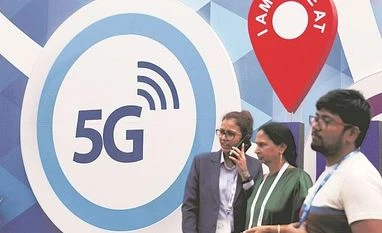 "Tata aims to get back into telecom game with 5G, using TCS' strengths")










 Connect with us on WhatsApp