Bengaluru-based Ola has said it is a leader in cab aggregator business in India and would be the first company to become profitable in this space.
Maturing as a company and in an effort to reduce costs, Bhavish Aggarwal-led taxi hailing app is cutting down on discounts to users and reducing incentives to drivers by up to 50 per cent per ride.
With this, about 80 per cent of Ola’s business has become profitable, said Pranay Jivrajka, chief operating officer. He said Ola offers incentives and discounts only in select cities because of competition from global rival Uber.
“Predatory pricing is a capital war that everyone is aware of and is not healthy for the sector as a whole. Our objective is to sustain in the market (and) in the business. We have capital to do such pricing, we are doing it and are the only Indian company at this time which can manage to do it,” Jivrajka told Business Standard in an interview. “If we do not, probably the market would be monopolised, as it happened in China and the US. Our competitors are into predatory pricing and to some extent we are (also) doing it.”
Backed by Softbank, Ola is fending off competition from Uber, which has made India its biggest battle ground after it lost in China to local rival Didi Chuxing. Uber has shifted resources from China to India and is investing a substantial part of $3.5 billion it raised from Saudi Arabia’s sovereign wealth fund here. Uber has raised its pitch by launching a massive advertising campaign.
“Bigger purse of Uber is not intimidating. We are the market leader. The traction on Ola platform is much higher. If I dissect our business, certain parts are already profitable. We see ourselves as the first ones to be profitable in India as we are on the right track for that. From a sustainability perspective, we are way ahead,” said Jivrajka.
Ola has denied recent speculations that it was in talks with investors to raise funds. “We are not feeling the burn. We can continue this war as we have been doing for the past few years. The levels of subsidies and pricing that the market has for consumers are clearly not sustainable. What I am seeing is drastic reduction in trends on subsidies,” said Jivrajka.
Both Ola and Uber follow a business model that has space for a sole winner in order to make money. In the asset-light, algorithm-driven, on-demand taxi business, the service that has the maximum number of drivers and users emerges as the winner. That is why Uber and Ola are giving incentives to get more drivers on their platform, while offering discounts to users. They earn about 25 per cent commission per drive from drivers.
Ola said while the money spent in smaller markets has reduced, it is still high for metro cities. “I think both us and the competitor are trying to reduce the subsidies, other than a few markets. If I talk about the overall platform, few categories are already profitable — black and white taxis, electric rickshaws, including more than 80 per cent of our market — are profitable. In around 10 markets, consisting mostly of metropolitan cities, fierce monopolistic competition is going on and that is where the brunt is with the other players in the ecosystem as well. However, we see the pricing we have is sustainable and are running a profitable show in other markets,” he said.
The company said while the consumer pricing is sustainable, it is trying to reduce subsidies to drivers. Both the platforms are facing a challenge in keeping the drivers with lower incentives. “The subsidy rationalisation for drivers is the part where we fight the war with the competition. For us, it has reduced to 50 per cent of what it was six months back,” Jivrajka added. WINNER TAKES IT ALL
Ola COO Pranay Jivrajka says 80 per cent business has become profitable
Driver incentives reduced by up to 50% per ride in past six months
Denies recent speculation that it’s trying to raise more funds
Fierce price war with uber restricted to 10 big cities
Says levels of subsidies and pricing unsustainable for both players

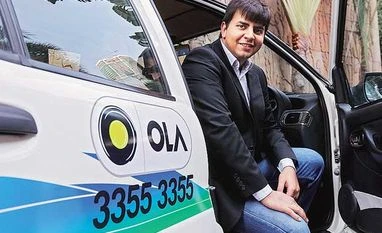 "Uber's bigger wallet not intimidating, we are the market leader, says Ola")


