Budget: MSMEs looking forward to achchhe din
MSMEs contribute nearly 8% to India's gross domestic product, 45% to the manufacturing output and 40% to exports
Virendra Singh Rawat Lucknow Micro, Small and Medium Enterprises (MSME), the non-glamorous cousins of large industries, are looking forward to “acche din” (good days) with the Union Budget 2014-15 looking promising to the sector.
In his Budget speech, Finance Minister Arun Jaitley conceded to the long pending demand of reviewing the MSME definition for higher capital ceiling.
Presently, micro, small and medium enterprises have capital investment (plant and machinery) ceiling of Rs 25 lakh, Rs 5 crore and Rs 10 crore in manufacturing; and Rs 10 lakh, Rs 2 crore and Rs 5 crore, respectively, in services sector.
The ceiling was fixed 8 years back under Micro, Small and Medium Enterprises Development (MSMED) Act 2006, when the rupee was hovering around Rs 45 against the US dollar vis-à-vis around Rs 60 today; implying 33 percent depreciation of the rupee.
Industry has been demanding the ceiling to be raised for spurring greater capital investment, while keeping them eligible for various incentives by the government.
MSMEs contribute nearly 8 per cent to India’s gross domestic product (GDP), 45 per cent to the manufacturing output and 40 per cent to exports, while accounting for the largest share of employment after agriculture.
Besides, the announcement of setting up of Rs 10,000 crore fund for attracting private capital via equity, quasi equity, soft loans and risk capital for start-ups is expected to quicken the pace of capital flow to the sector, which primarily leans to commercial banks for credit.
“We have been urging to raise the MSME capital ceiling and making provision for better capital flow to the sector. Our delegation had also met MSME minister Kalraj Mishra with our set of demands.”
“We are happy most of our proposals have been taken up in the Budget,” Indian Industries Association (IIA) divisional chairman Prasshant Bhatiya told Business Standard.
The budgetary proposal to facilitate forward and backward linkages with multiple value chain of manufacturing and service delivery would strengthen MSMEs and evolve a sustainable model for development.
Another welcome step in the Budget has been the talk of “entrepreneur friendly legal bankruptcy framework which will also be developed for SMEs to enable easy exit.”
Besides, a nationwide ‘District level Incubation and Accelerator Programme’ would be taken up for incubation of new ideas and providing necessary support for accelerating entrepreneurship. In his recent visit to Lucknow, Mishra had already hinted towards incubation programme. He had informed that the government would ramp up the number of incubation centres from 56 to 500, so as to cover all the districts with the help of private sector.
The provision of Rs 100 crore for start-up village entrepreneurship under National Livelihood Mission and Rs 200 crore for Scheduled Castes entrepreneurs would promote micro industries.
There are about 36 million MSMEs in India, of which 90 per cent are estimated to be operating in unorganised sector.

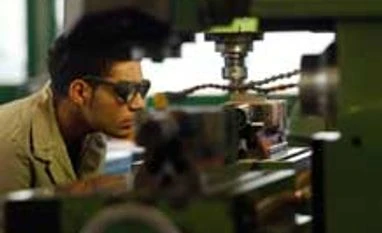 "Budget: MSMEs looking forward to achchhe din")


 Connect with us on WhatsApp