Omnichannel retail is the buzzword for both brick and mortar majors such as Future Group and Walmart as well as e-commerce companies such as Myntra and Nykaa. Yet, the strategy plays out differently for each brand.
Online furniture major Urban Ladder, for instance, has opted to focus on select cities when going offline in contrast to rival Pepperfry’s more aggressive approach. While Pepperfry first launched its experience centre in 2014, it has been swift in the last one year, coinciding with rival Urban Ladder’s brick and mortar play. The numbers tell the story where the two are going.
Pepperfry has 29 stores across 16 cities in the country, with the figure expected to more than double by March next year. Urban Ladder, in contrast, is expanding presence in the cities of Bengaluru and Delhi-NCR only. While the brand’s first store came up in Bengaluru in June last year, it has since added just four stores to the list — three in Bengaluru and one in Delhi-NCR. Four more are expected to come up by July in the south, Ajit Joshi, president and chief operating officer, Urban Ladder, says. And Delhi may see a few more, he adds, of the brand’s plans.
So why the snail’s pace in offline expansion? Joshi has a ready answer. “Five years online has allowed the company to understand the structure and requirements of the people in the region where we operate almost like a heat map. Internal surveys showed us that today’s customers are not willing to travel beyond eight km of their homes to shop, this helped us locate our stores in specific suburbs (within the select cities) for maximum impact and traction,” he says.
ALSO READ: Pepperfry rethinks user experience, increases range of low-priced goods Urban Ladder has a combination of large-format and small stores to build its offline presence, which, it says, is the best way for the brand to target consumers. The large format stores are typically between 4000 -7500 sq ft in size and cover its entire range of products. The small stores called ‘Sofa Lounges’, on the other hand, are around 1000 sq ft in size, and focus on sofas, sofa chairs, coffee tables, lamps, cushions and curtains.
Urban Ladder divides customers across three categories based on shopping patterns. The ‘A’ category shopper is the digital native and is comfortable buying any kind of furniture online. The ‘B’ category shopper will browse through products online, but will close the deal only in stores. The ‘C’ category shopper, especially in Delhi-NCR, believes in an offline experience only.
The furniture major has taken care to extensively map out high growth regions, especially in suburban areas within the two cities, helped by Google Analytics and by the new Goods & Services Tax regime that has redefined city limits.
Urban Ladder has allocated almost $3 million for its brick and mortar store expansion and has witnessed an almost 24 per cent growth in average order values in areas around its stores. While some of the categories have grown almost 100 per cent across all channels, others are finding their feet now, Joshi says.
As for its reach in other geographies, Urban Ladder will continue to use a mix of its own platform and allied players such as Amazon and Flipkart. “The whole Urban Ladder catalogue is open to online retailers. Suggestions are offered by Amazon and Flipkart about how the products should be displayed on their portals. Apart from that, we also have a number of workshops and outreach programmes through the stores to get customer feedback on designs,” Joshi says.
While third-party logistics providers do product delivery for Urban Ladder, the brand handles installation and maintenance of furniture on its own. Currently, almost 65 per cent of the inventory is made in India, while the rest comes from across the world. Large furniture pieces such as sofas are sourced from Delhi, Bengaluru and Mumbai. While smaller items come from Jodhpur and Jaipur.
Brand Urban Ladder, says Joshi, is the only name pushed into the minds of consumers as it strives to carve a niche for itself in a cluttered retail world. The firm works with almost 600 architectural outfits and interior decorators apart from working closely with real-estate developers to build engagement with customers. “Our team of twenty-plus designers has created unique products such that we are getting queries from small hotel chains and restaurants to help them design their interiors,” says Joshi. Urban Ladder has its heart in the right place.

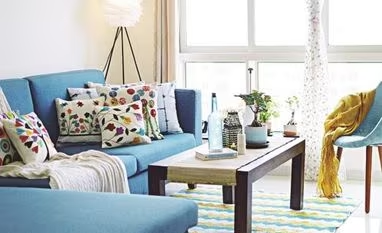 "Urban Ladder's offline strategy is different from rival Pepperfry's")












 Connect with us on WhatsApp