Videocon, Subhash Chandra's Essel Group cross swords over d2h merger

According to the deal, if the merger failed, the advanced amount of Rs 1,626 crore becomes payable
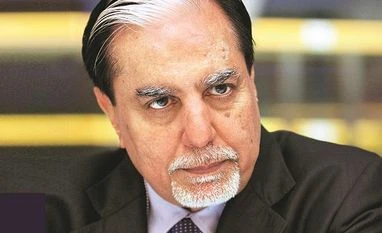
Subhash Chandra
Subhash Chandra
Dev Chatterjee Mumbai
Last Updated : Jan 28 2019 | 11:05 PM IST
Electroparts India, a promoter entity of the Videocon Group, which moved the Delhi High Court against Essel Group promoter companies, has sought its dues from the latter and alleged that the Subhash Chandra-owned firms have reneged on the merger agreement. The petition will come up for hearing on Wednesday.

In an open letter last week, Essel Group Chairman Subhash Chandra admitted that the merger transaction between Videocon d2h and Dish TV was “a mistake” which resulted in a huge loss. 

Dish TV, which closed at Rs 23.85 a share on Monday, has seen its share price falling by 67 per cent and lose Rs 3,500 crore in the last one year. 

The all-share swap merger was announced in November 2016 when the Dish TV stock was hovering at Rs 90 a share. The merger closed in March last year, according to stock market filings.

An email sent to Essel Group did not elicit any response but an insider said the matter was sub-judice.

The petition filed by a Videocon group promoter entity in July last year said the deal with Essel Group was that Videocon promoters’ shareholding in the merged entity to the extent of 9.9 per cent was be acquired by the former in two equal tranches of 4.95 per cent each — post-merger of both companies. 

A price of Rs 106.72 per share of the merged entity (irrespective of the market price) was fixed for the transfer, which amounted to around Rs 2,032 crore for the sale of the 9.9 per cent shareholding of the merged entity, the petition said.

As part of the transaction dated November 28, 2016, it was also agreed that up to 80 per cent of the consi­der­ation, or Rs 1,626 crore, would be paid upfront. This money was advanced by an Essel Group company to a Video­con group company by way of subscr­ib­i­ng to debentures issued by the latter. 

These debentures were then secu­red by a pledge on around 113.4 milli­on shares of Videocon d2h (which wo­u­ld be equivalent to around 228.9 mill­ion shares of Dish TV upon merger). 

The petition said the approximate value of such shares, calculated at Rs 106.72 per share, was more than Rs 2,440 crore. “It is important to note that the total number of 228.9 million shares pledged towards the security of 80 per cent of advance amount of Rs 1,626 crore was higher than 1.5 times of the 9.9 per cent shares agreed to be sold. These 1.5 times extra shares we­re pledged to protect Essel Group in the case of failure of the merger,” the petition filed by Videocon entity said. 

According to the deal, if the merger failed, the advanced amount of Rs 1,626 crore becomes payable and the pledge and guarantees were to be acted upon. 

However, once the merger was effective, the monies payable for acquiring 9.9 per cent in the Videocon group in Dish TV — Rs 2,032 crore was to be adjusted against the advance of Rs 1,626 crore and the applicable interest till the agreed time, and the Videocon group would have no obligation to repay the advanced amount of Rs 1,626 crore. 

However, the Videocon group promoter entities said once the merger becoming effective, the Essel group reneged on its commitment to acquire the shares and, on the con­trary, invoked the share pledge deal and engineered a transfer of shares. 

“In order to invoke the share pledge, it engineered a wrongful event of default through the other Essel group entities which were in direct and indirect control of promoters and advisors of Essel group,” the petition said.

Consequently, Essel group acquired the shares indirectly by invoking the pledge on the 228.9 million shares at a substantially lower price and thereby making “wrongful” gains, Videocon group alleged. The petition said, at the same time, the debenture trustee also failed to adhere to discharge its duties impartially. 

It said the amounts allegedly recovered by sale of such shares at an artificial lower price (contrary to price determined, agreed and mentioned in share purchase agreement) were shown not be adequate and hence it successfully engineered a purported under recovery of the amount paid to the Videocon group entities worth Rs 1,626 crore. 

The petition said to recover the shortfall the Essel group invoked the event of default in debenture and in turn, the guarantees provided by the Videocon promoter owned entities, for an amount which is not remained due and payable. Thus, the Essel Group had already acquired the shares in the merged entity and, at the same time, it had invoked the corporate guarantees provided by Videocon entities although there was no amount due after acquisition of these shares in the merged entity by the Essel Group.

One subscription. Two world-class reads.

Already subscribed? Log in

Subscribe to read the full story →
*Subscribe to Business Standard digital and get complimentary access to The New York Times

Smart Quarterly

₹900

3 Months

₹300/Month

SAVE 25%

Smart Essential

₹2,700

1 Year

₹225/Month

SAVE 46%
*Complimentary New York Times access for the 2nd year will be given after 12 months

Super Saver

₹3,900

2 Years

₹162/Month

Subscribe

Renews automatically, cancel anytime

Here’s what’s included in our digital subscription plans

Exclusive premium stories online

  • Over 30 premium stories daily, handpicked by our editors

Complimentary Access to The New York Times

  • News, Games, Cooking, Audio, Wirecutter & The Athletic

Business Standard Epaper

  • Digital replica of our daily newspaper — with options to read, save, and share

Curated Newsletters

  • Insights on markets, finance, politics, tech, and more delivered to your inbox

Market Analysis & Investment Insights

  • In-depth market analysis & insights with access to The Smart Investor

Archives

  • Repository of articles and publications dating back to 1997

Ad-free Reading

  • Uninterrupted reading experience with no advertisements

Seamless Access Across All Devices

  • Access Business Standard across devices — mobile, tablet, or PC, via web or app

Next Story



