
Will ONGC's HPCL acquisition lead to long-awaited integrated supply chain?
This acquisition could be followed by the acquisition of Mangalore Refinery and Petrochemicals Limited (MRPL) by HPCL
 "Will ONGC's HPCL acquisition lead to long-awaited integrated supply chain?")
WebinarsNew
Deep DiveNew
Explore Business Standard
This acquisition could be followed by the acquisition of Mangalore Refinery and Petrochemicals Limited (MRPL) by HPCL
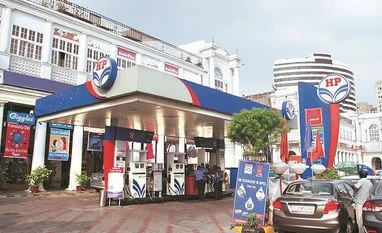
ONGC will buy 51.1 per cent of the government's equity in HPCL for Rs 369.15 billion ($581 billion) to stem the fiscal deficit and boost disinvestment -- a year after the Modi government mooted a much-needed initiative to create an integrated supply chain in the oil sector. The government will exceed its 2017-18 disinvestment target by Rs 200 billion after the "strategic sale".
Oil and Natural Gas Corporation Ltd (ONGC) Chairman Shashi Shankar confirmed that it will use debt, cash reserves and proceeds from sales of its stake in IOC and GAIL to fund the Hindustan Petroleum Corporation Ltd, India (HPCL) acquisition. It owns 13.77 percent stake in Indian Oil and 4.86 per cent in GAIL that is worth an estimated Rs 300 billion.
This could be followed by the acquisition of Mangalore Refinery and Petrochemicals Limited (MRPL) by HPCL (HPCL currently holds 16.96 per cent equity of MRPL). Chairman Shankar said: "That is a logical step. We see an advantage in that but cannot give a time frame." The merger will help in creating the first of the two fully-integrated oil and gas producers that India needs to create, so as to improve supply chain efficiency.
For a nation that still relies on imports for over 80 per cent of its oil and gas, India lacks a comprehensive energy strategy that costs it billions of dollars each year. Both the earlier United P{rogressive Alliance (UPA) and the current National Democratic Alliance (NDA) governments have previously failed to realise that the 30 largest oil-consuming nations have invested significantly in the integrated supply chain to improve efficiency and reduce costs. India fails to do that math despite repeated prodding by the International Energy Agency (IEA).
The talk of an integrated supply chain is not new. The proposal to integrate oil companies first came up in 2004 under the UPA. "It was then struck down by an expert committee, Sushil Chandra Tripathi, a former Petroleum Secretary, told this correspondent during a discussion on Lok Sabha TV last year.
"In the Western world we have Exxon Mobil, Shell, BP and Total; in Russia we have Rosneft and Gasprom, in Saudi Arabia we have Aramco and in China we have Sinopec. They are all large, integrated oil majors very unlike Indian companies," Tripathi added.
India has six separate entities, all very small by comparison: ONGC the oil producer, GAIL the gas producer, MRPL a refiner, and IndianOil Corporation Ltd (IOC), HPCL and BPCL that are refining and marketing companies. Strangely, the integrated supply chain concept does not exist in the Indian subcontinent. After the ONGC-HPCL merger, the integrated supply chain created by ONGC as a producer could add both "supply planning", including crude buying, storage and refining, as well as "distribution planning" that would have networked pipelines, transport and marketing infrastructure, and sales outlets like petrol pumps for retailing all petroleum products.
There are two major advantages of having integrated supply chains. Oil is an intensely volatile commodity. The production price of oil or gas is fairly high for Indian companies when compared to that of Saudi Arabia, Kuwait, Iran, Russia or the US. When crude prices are low, integrated oil companies import heavily. When international prices are high they raise their domestic production. This gives them better control over their profits -- which are high for the marketing arm when international prices drop and high for the producing unit when the prices surge.
Besides, the size of the company matters, as oil is a capital intensive industry. While the IEA recommends 90 days oil storage to stem crude oil volatility, India has just around 15 days storage capacity, mostly developed by the marketing and refinery units. When ONGC, with a net worth of Rs 221,900 crore, takes over HPCL (net worth Rs 21,070 crore) it automatically gives the latter fiscal muscle to improve its storage and pipeline capacities.
So, though the current acquisition is primarily to meet the government's disinvestment target, the process should be taken forward to ensure that India has two major integrated oil and gas majors -- the other one would be GAIL-IOC-BPCL -- that can compete on a global scale.
First Published: Jan 27 2018 | 12:53 PM IST

