Yet another AI Dreamliner in trouble, DGCA orders probe
BS Reporters New Delhi/Mumbai The Directorate General of Civil Aviation (DGCA) is probing the incident of an Air India flight, AI 123, from New Delhi to Rome losing radio contact over Italy on October 16. The regulator has directed the airline to submit a report on the incident.
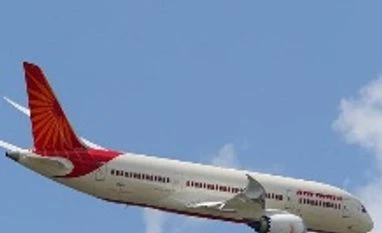
An Air India Dreamliner, registered VT-ANQ, lost radio control with air traffic control in Italy on October 16. Consequently, the Grosseto airbase was asked to intercept, identify and escort the aircraft. Two Italian air force Eurofighter Typhoon F-2000A jets· ·reached the B787 at 24,000 feet to the southeast of Rome. The Typhoons identified the plane, shadowed it from a distance and at 30 km from destination they were cleared to return to their base. According to sources in the know ·of the developments, the Air India aircraft was given direct routing into Italy. But pilots failed to establish contact with ·air traffic control upon entering Italian airspace due to failure of the jet's VHF radio sets. Italian air traffic controllers subsequently managed to establish contact on an emergency frequency. There are three radio sets on an aircraft, one of which is used only on the emergency frequency. "It can be said to be a case of overreaction on part of the Italian authorities", said an industry source.
| SNAGS APLENTY |
- Sept 20, 2012: AI 787s faced snags, when cooling units malfunctioned
- Jan 2013: All Nippon Airways grounded their Dreamliner fleet after two 787 batteries overheated on two different planes in less than two weeks
- Jan 2013: US based Federal Aviation Administration grounded all B-787s due to battery overheating
- Jan 2014: Japan Airlines temporarily grounded a Dreamliner after white smoke was spotted outside the plane
|
This is the second such incident reported over the last few months. In March, a Jet Airways Boeing 777-300ER flight from London to Mumbai was reported missing for 30 minutes over German airspace when pilots lost communication with German aviation authorities. The airline had at the time said the pilots had not turned on the volume after removing headphones, which led to the incident. The DGCA had investigated the incident and put the pilots off roster for two weeks.
Aircraft are tracked by radars and need to be in contact with air traffic control on VHF radio. Whenever pilots fail to communicate with air traffic control it is treated as a radio communication failure.
An aircraft passes through various air traffic controlled regions during a flight. Whenever an aircraft leaves the Mumbai area and is entering area under Delhi air traffic control, Mumbai will instruct the pilots to switch to the Delhi radio frequency. Air traffic controllers are aware of flight movements and can identify aircraft on their radars. However, an aircraft is treated as unidentified till a verbal communication takes place between pilots and ground controllers. Upon entering a different airspace pilots have to report their height and estimated time of reaching the next reporting point. Once this communication is carried out an aircraft is treated as identified.
When an aircraft does not identify itself or does not respond to messages on regular frequency, controllers try to establish contact on the emergency radio frequency. This is done because sometimes pilots fail to switch frequencies. The air force is also alerted. "We are unaware why a particular aircraft is not responding to messages. Is it a case of hijack? Is the pilot incapacitated? We are unaware till communication is established," said an air traffic control official.

 "Yet another AI Dreamliner in trouble, DGCA orders probe")


 Connect with us on WhatsApp