It calls itself the “de-extinction” company and it has now taken upon itself, literally, a mammoth task. Last month, US bio-startup Colossal launched a project to regenerate the extinct woolly mammoth, or rather to create an elephant-mammoth hybrid with mammoth characteristics, through gene-sequencing and gene-splicing.
Colossal has raised $15 million in seed funding. The initial funding was led by Thomas Tull, who’s associated with funding movies like Dune, Jurassic World and The Dark Knight; some has come from bitcoin millionaires, and some from mainstream venture capitalists like Breyer Capital, Draper Associates, Animal Capital and At One Ventures, among others.
The project is simple conceptually. The mammoth went extinct around 1650 BCE — less than 4,000 years ago. Since mammoths lived in cold, permafrost areas, well-preserved mammoth DNA is available. Mammoths were related to Asian elephants, with 99.6 per cent of DNA in common. Humans share 98.8 per cent of DNA with chimpanzees, and 98.4 per cent with gorillas, which should give you an idea of how much of a difference in species a tiny difference in DNA can make.
If the genes unique to mammoths are inserted into Asian elephant DNA, a viable hybrid embryo may result. The gene splicing technology, CRISPR, which allows easy cut-and paste insertion (and deletion) of genes may be capable of the delicate editing necessary. Colossal was co-founded by George Church, a Harvard professor who is also a genetics pioneer.
When it comes to mammoths, around 40-odd key genes have been identified. In 2017, Church’s lab at Harvard reported he had managed to add 45 genes to the genome of an Asian elephant in his attempt to recreate the mammoth. Church has tested a couple of the key genes, such as a gene for haemoglobin that allows oxygen exchange when the skin temperature is near-freezing.
Another complication is caused by size differences. Female Asian elephants are 2.5 metres tall at the shoulder and 2.7 tonnes in weight. The mammoth was nearer 4 metres tall and 6 tonnes. Female African elephants are larger, at 2.7 metres height and heavier (3 tonnes). So the hybrid embryo would be transferred to an African elephant, more suited to carrying a larger foetus to term.
If it works, the experiment claims it will create “a cold-resistant elephant with all of the core biological traits of the Woolly Mammoth” — thick woolly coat, fat deposits, small ears to minimise exposure, curling large tusks to push through frozen ground to access buried vegetation. This hybrid will be able to inhabit the same ecosystem the mammoth did. With luck, it will breed true as well.
If successful, the technology could potentially be used to help save some of the million or so species now on the verge of extinction. Whether it succeeds or not, it may lead to insights that may help prevent modern elephant extinction, and also advances in multiplex CRISPR editing, as well as possibly establishing links between genetics and climate change.
Even more ambitiously, Colossal says it could “help reverse climate change”, “help endangered species”, and “upset existing ecosystems”. Unpacking those claims, the mammoth lived in the Siberian Tundra and Colossal says it had a huge impact on maintaining grasslands, which are better at absorbing carbon than the mossy forest and wetlands, which currently exist.
There’s a sort of magical assumption that if the hybrid could be introduced in large numbers, it would disrupt the current ecological balance by uprooting trees, and thus return the Tundra to the grasslands of 4,000 years ago. This would mean better carbon absorption and limit damage from global warming, which is now leading to a massive unfreezing of the Arctic. This is a big stretch: it presupposes the hybrid could be introduced in large enough numbers to change the ecosystem and also that it wouldn’t have negative consequences on other species.
At a moral and ethical level, humans made a major contribution to mammoth extinction, by hunting them. The preferred technique was apparently driving them off cliffs by using fire, if we go by cave paintings. We are also responsible for driving innumerable other species over metaphorical cliffs. If Colossal does pull it off, perhaps it would help reverse some of the speciocide.

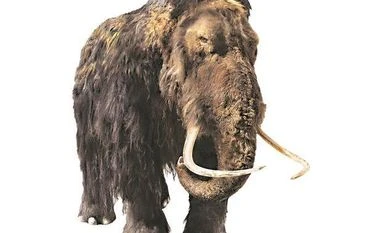 "A mammoth project to help endangered species and planet")












 Connect with us on WhatsApp