The late environment minister, Anil Madhav Dave, did not support the commercial use of genetically modified (GM) mustard crops in India, environmental activist Vandana Shiva has claimed.
The minister, who died last week, was to have taken the final decision on the commercial cultivation of GM mustard, which had recently been approved by the Genetic Engineering Appraisal Committee, India's bio-tech regulator under the ministry.
Science and Technology minister Harsh Vardhan on Monday took over additional charge of the environment ministry.
"I had spent time with Anil Dave and he had studied the issue enough to know that this was rushing into the wrong place. He was obviously not ready to sign the proposal," Shiva said yesterday during the launch here of her NGO Navdanya's new book, "Annam, Food as health".
Describing Monsanto and Bayer - two multinational companies pushing GM crops in India - as a "cartel", Shiva said they "monopolised" GM crop cultivation and removed all obstacles in the way.
Monsanto India declined to comment on the charges levelled by the activist.
Shiva said two former Congress ministers, seen as stumbling blocks for GM crop cultivation in India, had lost their portfolios.
She referred to former minister Jairam Ramesh, saying that he lost his job soon after he passed a moratorium order on Bt brinjal.
"When Jayanti Natarajan refused to sign on an affidavit for the Supreme Court in the GMO (Genetically Modified Organism) case she lost her job, too," she said.
Shiva said the Bt cotton case was a "good learning example" for India. She argued that a pest control technology had created a new "pest epidemic", with more pesticides being used today than before.
"Bt cotton was always pushed as beneficial for farmers. But more than 80 per cent of farmer suicides occurred in the cotton belt," she said.
Happy to hear about the Kerala legislative assembly unanimously passing a resolution opposing GM mustard, Shiva said she was hopeful that other states would soon follow suit.
"The states ultimately have the highest authority on agriculture. Kerala has passed a resolution against it, Nitish Kumar is opposing it in Bihar. Rajasthan, which is a big mustard growing area, also opposes it," she added.
Recently, Union Food Processing Minister Harsimrat Kaur Badal, too, had spoken against the use of GM crops.
The newly released book, which shows a connection between bio-diversity, organic food and health, is Navdanya's attempt at highlighting how India can be fed through biodiversity intensive systems of farming which are free of chemicals and GMOs, among other things.

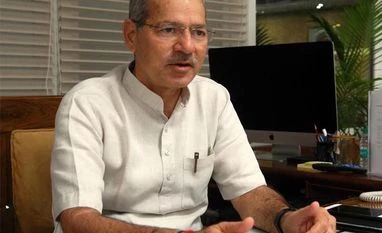 "Anil Dave was not in favour of GM mustard, says Vandana Shiva")

