Arun Jaitley: Keeping reform process on
Two years into the government's five-year mandate, Jaitley has proven to be one of its most reformist voices
Arup Roychoudhury New Delhi No assessment of the performance of the government’s two years in office is possible without taking into account the report card of its finance minister, Arun Jaitley.
On February 29, Jaitley announced what is considered a fiscally astute Budget and stayed true to an earlier deficit target of 3.9 per cent of gross domestic product. The announcements in the Budget are being followed up with action on policy, as was evidenced recently with the new Indo-Mauritius taxation treaty and Parliament clearing a much-needed insolvency and bankruptcy law. Most reforms, though, are not of the legislative variety. In Jaitley’s own words to this newspaper: “The course we adopted was that there were some low-hanging fruits, easy to pluck. One was opening up as much foreign direct investment (FDI) as possible and then slashing all conditions.” He’s also spoken at length about cleaning up and making transparent the process of allocating natural resources like coal and telecom spectrum.
The 2016-17 Budget had to incorporate the need for drought relief and additional spending due to capital spending commitments, the Seventh Pay Commission award and the one rank-one pension rule for ex-soldiers. Keeping the fiscal deficit target within the earlier-set target got good marks from markets and rating agencies.
Jaitley also announced the most comprehensive road map for strategic sales of state-owned companies since the large divestments carried out by the Atal Bihari Vajpayee government in the early 2000s. The current plan envisages government offloading part or complete stake in loss-making public sector units, selling of idle assets like factories, office buildings and warehouses, and exiting sectors where the government “has no business being in business”. The Budget, with its focus on infrastructure and the rural sector, burnished the credentials of the government.
After seemingly grappling in the dark over Rs 8 lakh crore of non-performing assets (NPAs) in banks during its first year in power, the government is now seen as actively working to reduce the stress in the banking system. With comprehensive announcements regarding recapitalisation, appointments to executive positions, and consolidation, the government and the Reserve Bank of India are hoping the NPA growth will begin to taper after the current quarter. Another important measure was the passage of the Aadhaar Bill and continuously expanding the scope of the Direct Benefits Transfer platform.
The biggest criticism one can lay at Jaitley’s door, as the government’s chief troubleshooter, is the failure to bring the Congress on board to enable passage of the constitutional amendment to enable a national goods and services tax. There are also the legacy taxation cases against the likes of Cairn and Vodafone, the constant rap on being unable to let go of the weapon of retrospective taxation. As for action on undisclosed money, clearly more needs to be done.
Jaitley benefited from the low crude oil prices in FY16. As global prices crawl back past $50, it is left to see to what extent the subsidy and expenditure reforms continue. It is, however, recognised that two years into the government’s five-year mandate, Jaitley has proven to be one of its most reformist voices.

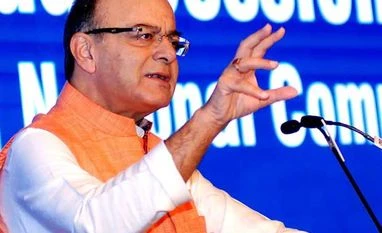 "Arun Jaitley: Keeping reform process on")


 Connect with us on WhatsApp