
Behind Pfizer's Covid vaccine, an understated husband-and-wife 'dream team'
Pfizer and BioNTech are the first drugmakers to show successful data from a large-scale clinical trial of a coronavirus vaccine
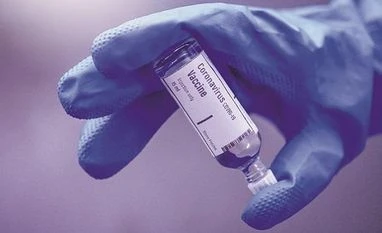 "Behind Pfizer's Covid vaccine, an understated husband-and-wife 'dream team'")
premium
WebinarsNew
Deep DiveNew
Explore Business Standard
Pfizer and BioNTech are the first drugmakers to show successful data from a large-scale clinical trial of a coronavirus vaccine
Positive data on BioNTech and U.S. partner Pfizer Inc's COVID-19 vaccine is an unlikely success for the married couple behind the German biotech firm, who have devoted their lives to harnessing the immune system against cancer.Pfizer said on Monday said its experimental vaccine was more than 90% effective in preventing COVID-19 based on initial data from a large study.
Pfizer and BioNTech are the first drugmakers to show successful data from a large-scale clinical trial of a coronavirus vaccine. The companies said they have so far found no serious safety concerns and expect to seek U.S. emergency use authorization later this month.
From humble roots as the son of a Turkish immigrant working at a Ford factory in Cologne, BioNTech Chief Executive Ugur Sahin, 55, now figures among the 100 richest Germans, together with his wife and fellow board member Oezlem Tuereci, 53, according to weekly Welt am Sonntag.
The market value of Nasdaq-listed BioNTech, which the pair co-founded, had ballooned to $21 billion as of Friday's close from $4.6 billion a year ago, with the firm set to play a major role in mass immunisation against the coronavirus.
"Despite his achievements, he never changed from being incredibly humble and personable," said Matthias Kromayer, board member of venture capital firm MIG AG, whose funds have backed BioNTech since its inception in 2008.
He added Sahin would typically walk into business meetings wearing jeans and carrying his signature bicycle helmet and backpack with him.
Doggedly pursuing his childhood dream of studying medicine and becoming a physician, Sahin worked at teaching hospitals in Cologne and the southwestern city of Homburg, where he met Tuereci during his early academic career.
Medical research and oncology became a shared passion.
Tuereci, the daughter of a Turkish physician who had migrated to Germany, said in a media interview that even on the day of their wedding, both made time for lab work.
Together they honed in on the immune system as a potential ally in the fight against cancer and tried to address the unique genetic makeup of each tumour.
Life as entrepreneurs started in 2001 when they set up Ganymed Pharmaceuticals to develop cancer-fighting antibodies, but Sahin - by then a professor at Mainz university - never gave up academic research and teaching.
They won funding from MIG AG as well as from Thomas and Andreas Struengmann, who sold their generic drugs business Hexal to Novartis in 2005.
That venture was sold to Japan's Astellas in 2016 for up to $1.4 billion. By then, the team behind Ganymed was already busy building BioNTech, founded in 2008, to pursue a much broader range of cancer immunotherapy tools.
That included mRNA, a versatile messenger substance to send genetic instructions into cells.
DREAM TEAM
For MIG's Kromayer, Tuereci and Sahin are a "dream team" in that they reconciled their visions with the constraints of reality.
The BioNTech story took a twist when Sahin in January came across a scientific paper on a new coronavirus outbreak in the Chinese city of Wuhan and it struck him how small the step was from anti-cancer mRNA drugs to mRNA-based viral vaccines.
BioNTech quickly assigned about 500 staff to project "light speed" to work on several possible compounds, winning pharma giant Pfizer and Chinese drugmaker Fosun as partners in March.
Matthias Theobald, a fellow oncology professor at Mainz university who has worked with Sahin for 20 years, said his tendency toward understatement belies a relentless ambition to transform medicine, exemplified by the leap of faith to a COVID-19 vaccine.
"He is a very modest and humble person. Appearances mean little to him. But he wants to create the structures that allow him to realise his visions and that's where is aspirations are far from modest," Theobald said.
Sahin told Reuters on Monday the read-out amounted to an "extraordinary success rate" but that he did not know earlier in the year how difficult the task overall would be.
"It's certainly not something that you would easily voice as a serious scientist, but it was within the realms of possibility from the beginning."
Already subscribed? Log in
Subscribe to read the full story →

3 Months
₹300/Month
1 Year
₹225/Month
2 Years
₹162/Month
Renews automatically, cancel anytime

Premium stories handpicked daily by our editors


News, Games, Cooking, Audio, Wirecutter & The Athletic
Digital replica of our daily newspaper — with options to read, save, and share


Insights on markets, finance, politics, tech, and more delivered to your inbox
In-depth market analysis & insights with access to The Smart Investor


Repository of articles and publications dating back to 1997
Uninterrupted reading experience with no advertisements


Access Business Standard across devices — mobile, tablet, or PC, via web or app
First Published: Nov 10 2020 | 7:52 AM IST


 Connect with us on WhatsApp