The Nuclear Power Corporation’s (NPC) got a moral boost after Prime Minister Manmohan Singh announcement that the first phase (1,000 Mw) of the Kudankulam nuclear power project in Tamil Nadu will be operational by April.
The NPC has been carrying out a number of commissioning tests at the plant site in the presence of a high-level team of the nuclear regulator, the Atomic Energy Regulatory Board (AERB).
An NPC official, who is associated with the ongoing tests, told Business Standard, “The commissioning tests are mandatory as per the prescribed norms. The AERB team is very much at the plant site during these tests. More than 1,000 workers and the Russian team, in association with NPC scientists, have been working 24x7 for the successful commissioning of the project.” The official added that the second unit of 1,000 MW is expected to be commissioned in October.
R Bhattacharya, secretary, AERB, explained that the various systems need to be pressurised and hydro tested. Besides, tests are conducted to verify that the functioning of instruments. These system performance tests are necessary. AERB had given clearance for the second heat up and full system tests of the unit-1 on January 24.
“Before putting into the criticality (starting operations), you must ensure that all things perform as per plan. After these tests are complete, AERB’s observer team, which is currently at the plant site, will submit its report to AERB. After its review, the AERB will grant next clearance for first approach to criticality (FAC). Thereafter, further tests and experiments will be carried out in a staged manner,” Bhattacharya said.
After these tests are cleared by AERB, NPC will start stage-wise power production.
Bhattacharya said that in the wake of the Fukushima nuclear accident in March 2011, the AERB has thoroughly reviewed all safety aspects at the Kudankulam project site.
Subsequently, NPC implemented all these safety applications, especially with respect to flooding level.
The NPC official recalled that according to the earlier plan, the first phase was to be commissioned in September 2007, which was later rescheduled to December 2011. However, it was delayed due to protests. Similarly, the second phase was planned for commissioning in March 2012. However, the Fukushima nuclear accident led to review of safety applications.
The delay in commissioning of the Kudankulam project has resulted in a 14 per cent rise in project cost.
The cost has escalated to Rs 15,454 crore as on January 2013 from Rs 13,600 crore during the commencement of construction in September 2001.

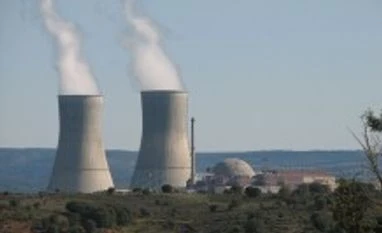 "PM's April date for Kudankulam a shot in the arm for NPC")


 Connect with us on WhatsApp