Coronavirus lockdown hits medicine supply, chemists' body seeks govt help

The chemists' association reached out to the (DoP), state chief ministers and even to the Prime Minister's Office highlighting the challenges faced in transporting medicines

Medical
There are around 300-400 large warehouses across the country that stock medicines and these are located on the outskirts of cities
Sohini DasGireesh Babu Mumbai, Chennai
3 min read Last Updated : Mar 24 2020 | 9:48 PM IST
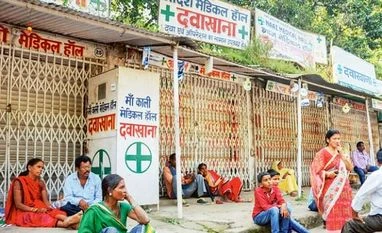
With a majority of India under lockdown, the going has got tough for providers of essential services, too. Medicine traders, for example, are facing a crisis of logistics.

The chemists’ association reached out to the Department of Pharmaceuticals (DoP), state chief ministers and even to the Prime Minister’s Office highlighting the challenges faced in transporting medicines.

Explaining the situation, Jagannath Shinde, president of the All India Organisation of Chemists and Druggists (AIOCD) that represents 850,000 chemists across India, said they had approached Prime Minister Narendra Modi to ensure that delivery does not collapse. “I had a video-conference with the Prime Minister and we have also written to the DoP, which has assured assistance,” Shinde said.

There are around 300-400 large warehouses across the country that stock medicines and these are located on the outskirts of cities. Each warehouse is typically manned by around 100-150 persons. However, people are finding it difficult to commute now. About 4 million people are employed in the 850,000 chemists’ shops across India and a few hundred thousand are involved in the distribution network.

The government needs to come up with a framework for drug distribution as about 600 districts are under lockdown, said Rajiv Singhal, general secretary of AIOCD. He added that the chemists’ association had issued identity cards to all workers, but there were some problems on the ground. Hence, the AIOCD sent letters to chief ministers urging them to take necessary steps.

For example, while pharmacists have ID cards, everybody at the shops is not a pharmacist. There are porters, computer operators and managers and all of them are required for the distribution chain to work smoothly, Singhal explained. Traders are unable to get people for loading and unloading consignments. Courier vehicles do not carry medicines alone, and transporter passes are, thus, getting held up.

Ankur Agarwal — founder and director of pharmacy chain Medkart that runs stores across Gujarat, Maharashtra and Rajasthan — said that not only were there hurdles to the movement of medicines with state and district borders closing down, but intra-city transport was affected as well. Additionally, employees were finding it hard to reach shops.

Around 20 per cent of staff at Medkart were absent, Agarwal said, adding, “People here commute on two-wheelers mostly and we have given uniforms to our staff, which is easing their transit. But in other cities like Mumbai, where even local trains are not functioning, the challenges are more,” he said.

On top of this, he added that many neighborhood drug stores were shut because of manpower issues.

K K Selvan, general secretary of the Tamil Nadu Chemists and Druggists Association (TNCDA), said there was a shortage of 10 per cent of employees at pharmacies. Selvan added that there was a 300 per cent increase in customers at stores.

DoP has taken note of the situation and asked chief secretaries of states and Union Territories to take necessary steps to ensure free movement of all those involved in dispensing and distribution of medicines — from retail, wholesale, and carry and forward (C&F) locations.

Singhal added that panic buying had made the situation worse. “Chronic patients are stocking medicines for 60-90 days now instead of 30 days. There is sufficient stock of medicines in the market,” he said.

Till Saturday, most retailers were getting regular stocks from C&F agents. However, the lockdown had created issues over the past two days. AIOCD is worried that if immediate steps are not taken to ease the situation, the distribution system might get paralysed soon.

One subscription. Two world-class reads.

Already subscribed? Log in

Subscribe to read the full story →
*Subscribe to Business Standard digital and get complimentary access to The New York Times

Smart Quarterly

₹900

3 Months

₹300/Month

SAVE 25%

Smart Essential

₹2,700

1 Year

₹225/Month

SAVE 46%
*Complimentary New York Times access for the 2nd year will be given after 12 months

Super Saver

₹3,900

2 Years

₹162/Month

Subscribe

Renews automatically, cancel anytime

Here’s what’s included in our digital subscription plans

Exclusive premium stories online

  • Over 30 premium stories daily, handpicked by our editors

Complimentary Access to The New York Times

  • News, Games, Cooking, Audio, Wirecutter & The Athletic

Business Standard Epaper

  • Digital replica of our daily newspaper — with options to read, save, and share

Curated Newsletters

  • Insights on markets, finance, politics, tech, and more delivered to your inbox

Market Analysis & Investment Insights

  • In-depth market analysis & insights with access to The Smart Investor

Archives

  • Repository of articles and publications dating back to 1997

Ad-free Reading

  • Uninterrupted reading experience with no advertisements

Seamless Access Across All Devices

  • Access Business Standard across devices — mobile, tablet, or PC, via web or app

Topics :Coronavirusmedical industryPharmaceuticals

Next Story




