
Bharat Biotech first Indian Covid vaccine maker to get peer-reviewed data
There were no serious side effects in the participants enrolled for the phase 1 trials, according to the results published in The Lancet
 "Bharat Biotech first Indian Covid vaccine maker to get peer-reviewed data")
WebinarsNew
Deep DiveNew
Explore Business Standard
There were no serious side effects in the participants enrolled for the phase 1 trials, according to the results published in The Lancet
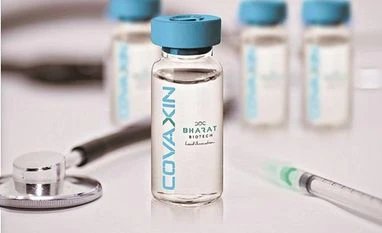
India's first indigenous vaccine against COVID-19, Covaxin, showed enhanced immune response without any serious side effects in the participants enrolled for the phase 1 trials, according to the results published in The Lancet Infectious Disease journal.
Developed by Bharat Biotech in collaboration with the Indian Council of Medical Research (ICMR) and the National Institute of Virology (NIV), Pune, the vaccine has been granted emergency use authorisation in clinical trial mode' by the Indian government.
Bharat Biotech is the first Indian vaccine maker to publish peer-reviewed data for Phase-1 trials. Serum Institute of India, which is producing Oxford/Astrazeneca vaccine, has not yet published any data from its India trials for Covishield. Another indegenous vaccine maker Zydus Cadila, which is making a three-dose ZyCov-D shot (Currently in Phase-3 trials), is yet to publish the peer-reviewed data.
Covaxin, which is now undergoing phase-3 trials, had raised concerns among experts over its emergency approval earlier this month by India's drug regulator.
The vaccine, codenamed BBV152, was well tolerated in all dose groups with no vaccine-related serious adverse events, noted the authors of the study funded by Bharat Biotech.
The same results were earlier published in the preprint server medRxiv in December.
However, there has been no new data released in the public domain which could demonstrate further safety and efficacy of the preventive.
The authors said that all adverse events were mild and moderate, and were more frequent after the first dose, adding that one adverse event was reported but was unrelated to the vaccine.
The randomised phase 1 trial to assess the safety and immunogenicity of BBV152 was carried at 11 hospitals across India.
Adults aged 18-55 years who were deemed healthy by the investigator were eligible.
Between July 13 and 30, last year, 827 participants were screened, of whom 375 were enrolled.
Among the enrolled participants, 100 each were randomly assigned to the three vaccine groups, and 75 were randomly assigned to the control group.
Two intramuscular doses of vaccines were administered 14 days apart.
"BBV152 led to tolerable safety outcomes and enhanced immune responses. The vaccine was well tolerated in all dose groups with no vaccine-related serious adverse events," the authors of the study said.
The most common adverse event was pain at the injection site, followed by headache, fatigue, and fever.
Covaxin is an inactivated vaccine developed by chemically treating novel coronavirus samples to make them incapable of reproduction.
This process leaves the viral proteins, including the spike protein of the coronavirus which it uses to enter the human cells, intact.
Given as two doses, three weeks apart, the viral proteins in the vaccine activate the immune system and prepare people for future infections with the actual infectious virus.
According to Bharat Biotech, the therapeutic can be stored at room temperature for at least a week.
First Published: Jan 22 2021 | 3:26 PM IST


 Connect with us on WhatsApp