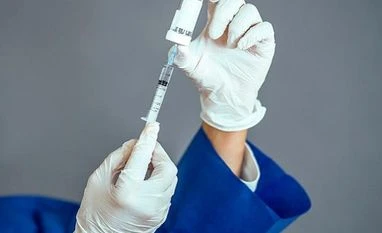
The quest for a Covid-19 vaccine may have started in the laboratories but that’s only the start of a long process that involves the government and private sector working on the other issues that bridge the gap from lab to jab — from manufacturing and manpower to logistics and distribution priorities.
That is why most of those involved in the race for a vaccine are studiously non-committal about a timeline. The 2020-end deadline that is being bandied about in the public domain is purely speculative.
Balram Bhargava, chief of Indian Council of Medical Research, in a recent interview with Business Standard had said that even if another country succeeds in developing a vaccine first, India or China will have to scale it up.
Scaling up manufacture is actually the least of the problems. India’s vaccine-making abilities are among the highest in the world. Several companies, including Bharat Biotech and Indian Immunologicals (IIL), have indicated that they are open to collaborations to scale up capacities for the Covid-19 vaccine. None has materialised yet, but sources suggest that three Hyderabad-based vaccine makers — Bharat Biotech, IIL and Biological E — could opt for a manufacturing collaboration. All three are working on Covid vaccine candidates.
Biological E (BE) recently tied up with Johnson & Johnson for its candidate and has augmented its vaccine-making capacity by acquiring Akorn India, which has a plant in Himachal Pradesh, to make sterile injectables. BE’s managing director, Mahima Datla, said: “We will leverage BE’s and Akorn India’s capabilities both in vaccines and in generic injectables. The timing of this acquisition is fortuitous as it will immediately allow us to expand our capacity to manufacture our investigational Covid-19 vaccine. With these capacities, we would be in a position to offer over one billion doses a year.”
Collaborations in vaccine manufacture have to be based on many technical considerations, however. A vaccine using an inactivated virus, which is a time-tested technology, requires a much higher level of biosafety standards than a vaccine using the DNA formula (meaning it will not use the SARS-Cov-2 strain), such as the one being made by Zydus.
As of now, three vaccine candidates are the front-runners in India: Zydus Cadila, Bharat Biotech and Serum Institute for the Oxford-AstraZeneca vaccine.
Bharat Biotech is using an inactivated virus vaccine and can make 300 million doses of it a year. Serum Institute, which will start phase II and III trials by end of August, plans to make around a similar number to start with. And Zydus will be able to make a few hundred million doses at its Ahmedabad plant.
Beyond manufacturing, transportation and logistics are other challenges. India has used the Electronic Vaccine Intelligence Network (eVIN) to track information on the vaccine supply chain and stocks across the country during the Covid-19 pandemic. This system provides real-time information on stocks, storage temperatures across registered vaccine storage sites in India. The network has 23,900 digital temperature loggers and 41,420 cold chain handlers for digital record-keeping.
Industry experts believe India has a fairly developed cold chain network, especially due to an extensive national immunisation programme through schemes such as the National Rural Health Mission and the Mission Indradhanush to improve the immunisation coverage of India.
But the main challenges will be around the availability of trained personnel to administer vaccines. Chhaya Pachauli, member of the Jan Swasthya Abhiyan (JSA), a national health care platform, said if the vaccine is to be administered in the conventional way through intramuscular injection, then training would not be a major problem. “It is done periodically for new workers who join and as refreshers for old ones,” she said.
The issue would be whether such workers are available in sufficient numbers. Auxiliary nurses, midwives and village-level health workers, who are used to dealing with 20 to 30 children in a day, will have to deal with a much larger number of people, most of them adults.
“We are very keyed into vaccines for children. Are we going to be able to mobilise individual adults to come forward? We have very little experience with adult vaccination,” said Rakhal Gaitonde, professor, Sree Chitra Tirunal Institute for Medical Sciences and Technology, Thiruvananthapuram. She gave the example of the influenza vaccine, which has been administered extensively in the US and Europe but not in India, probably because the vaccine is not free.
Will the Covid-19 vaccine see a similar fate? “If you are going to use vaccination as a way of preventing the epidemic from spreading or, at some point, controlling it totally, then the government cannot make it optional,” Gaitonde pointed out, adding that in that case the vaccine will either have to be distributed free or under a price cap.
Meanwhile, the government is still discussing the details of a vaccine procurement plan and has already directed states not to chart separate pathways of procurement. A meeting with indigenous vaccine makers on Monday involved more clarity on procurement and investments to scale up capacities. A government official said that the process has just started, and once the vaccine expert group holds more meetings, the granular details will emerge.
Private hospitals are gearing up to participate in the vaccination drive once any candidate gets the regulator’s nod. “We have around 6,000 staff, and we will be more than willing to procure and vaccinate our staff once a candidate is available in the market,” said Dilip Jose, CEO of Manipal Hospitals.