The COVID-19 pandemic has emphasised the fact that unregulated exploitation of natural resources coupled with unsustainable food habits and consumption pattern lead to destruction of system that supports human life, Environment Minister Prakash Javadekar said.
Addressing the UN Biodiversity Summit held virtually on Wednesday, Javadekar said India has been championing the cause of climate action through conservation, sustainable lifestyle and green development model.
Since time immemorial, India has a culture of not just conserving and protecting nature, but living in harmony with nature. The emergence of COVID-19 has emphasised the fact that unregulated exploitation of natural resources coupled with unsustainable food habits and consumption pattern lead to destruction of system that supports human life, he said.
"On the occasion of the 75th anniversary of the UN and the start of the UN Decade of Action and Delivery for Sustainable Development', lets join our efforts to put nature on a path to recovery and realise the vision of living in harmony with nature'," he said.
A record number of countries - nearly 150 countries and 72 Heads of State and Government - addressed the first ever Summit held on biodiversity to build political momentum towards the post-2020 global biodiversity framework, to be adopted at COP15 in Kunming, China next year.
The Summit comes on the heels of the Leader's Pledge on Monday, which saw 74 countries commit to preserving biodiversity, sending a united signal to step up global ambition for biodiversity and to commit to matching our collective ambition for nature, climate and people with the scale of the crisis at hand.
Javadekar said that inspired by Mahatma Gandhi, the ethos of non-violence and protection of animals and nature have been suitably enshrined in the Constitution of India and is reflected in several laws and legislations.
It is due to these beliefs and ethos that India, with only 2.4 per cent of the earth's land area hosts around 8 per cent of the world's recorded species, he said.
Javadekar told the Summit that India aims to restore 26 million hectares of degraded and deforested land, and achieve land-degradation neutrality by 2030. This is a target which shows our ambition, he said.
Further, he said that in the course of last decade, India has enhanced the combined forest and tree cover to 24.56 per cent of the total geographical area of the country.
India also now has the highest number of tigers in the wild and have doubled its numbers ahead of the deadline of 2022 and recently announced the launch of Project Lion and Project Dolphin.
As enshrined in our vedic scripts Prakriti Rakshati Rakshita' - that is if you protect nature, nature will protect you, he said.
India has also operationalised a system for access and benefit-sharing provisions of the Convention on Biological Diversity through a national network of 250,000 Biodiversity Management Committees across the country involving local people and 170,000 Peoples Biodiversity Registers for documentation of biodiversity.
The post-2020 global biodiversity framework that will be adopted at the 15th Conference of Parties to the CBD in 2021 provides a good opportunity to enhance efforts to conserve and protect nature, he said.
"India has already taken leadership role in order to conserve biodiversity by organising two CoPs within a span of less than a year, he said, adding that India had organised CoP-14 of UNCCD during September, 2019 in New Delhi, followed by CoP 13 of the Convention on Migratory Species (CMS) in Gandhinagar in Gujarat during February 2020.
Recognising that the continued deterioration and degradation of the world's natural ecosystems were having major impacts on the lives and livelihoods of people everywhere, world leaders called for increased resolve to protect biodiversity at the UN.
UN Secretary-General Antnio Guterres said biodiversity and ecosystems are essential for human progress and prosperity. By living in harmony with nature, we can avert the worst impacts of climate change and recharge biodiversity for the benefit of people and the planet.
Let me be clear, he added. Degradation of nature is not purely an environmental issue. It spans economics, health, social justice and human rights. Neglecting our precious resources can exacerbate geopolitical tensions and conflicts.
"Yet, too often environmental health is overlooked or downplayed by other government sectors. This Summit is our opportunity to show the world that there is another way. We have to change course and transform our relationship with the natural world, he said.

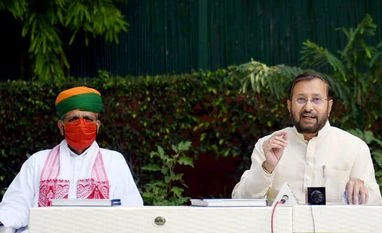 "Covid emphasised importance of living in harmony with nature: Javadekar")


 Connect with us on WhatsApp