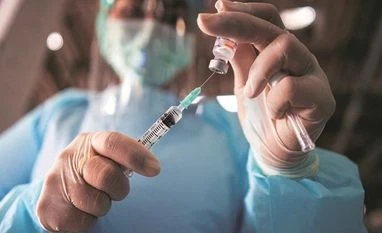
Decoded: How WHO's mRNA Tech Transfer Hub is working for vaccine access

After examining several proposals from India, Hyderabad-based Biological E has now been selected to partner with WHO to make mRNA technology-based vaccines in the country

vaccine
Sohini Das Mumbai
4 min read Last Updated : Apr 06 2022 | 6:05 AM IST
Concerned that low- and medium-income countries would be left behind in access to Covid-19 vaccines, the World Health Organisation (WHO) came up with the idea of setting up an mRNA Technology Transfer Hub in South Africa. While the hub will develop the mRNA Covid vaccine, several centres (or “spokes”, as they have been termed) across the globe would have access to the technology and the know-how to make the vaccine locally. After examining several proposals from India, Hyderabad-based Biological E has now been selected to partner with WHO to make mRNA technology-based vaccines in the country as part of the Techno­logy Transfer Hub project. Let’s find out what the hub is all about and how it will help in making Covid vaccines more accessible to an underserved world.

What is the WHO mRNA technology transfer hub?

Announced on June 21, 2021, the technology transfer hub is a centre of excellence and training the objective of which is to build capacity in low- and middle-income countries to produce mRNA vaccines.

The hub is located at Afrigen, Cape Town, South Africa, and will work with a network of technology recipients (spokes) in low- and middle-income countries.

The hub at Afrigen will share technology and technical know-how with local producers. “WHO and partners will bring training and financial support to build the necessary human capital for production know-how, quality control and product regulation, and will assist where needed with the necessary licenses,” the global agency says on its website.

The hub and its partners will produce the mRNA vaccines. Recipients of the technology may also sign agreements with producers or develop the vaccines locally.

Why did WHO establish the mRNA technology transfer hub?

WHO felt that low- and middle-income countries would be pushed to the end of the queue for receiving Covid-19 vaccines due to vaccine hoarding by wealthy countries, companies prioritising supplies to their own governments, and also production and supply constraints. mRNA tech transfer hub surfaced as a strategy to increase mRNA vaccine production capacity in underserved regions.

“The aim is to support manufacturers in low- and middle-income countries to produce their own vaccines, ensuring that they have all the necessary operating procedures and know-how to produce mRNA vaccines at scale and according to WHO Good Manufacturing Practices,” WHO said.

How many such tech transfer hubs have been created?

The initiative is supported by WHO, the Medicines Patent Pool and the Act-Accelerator or COVAX.

In April 2021, WHO issued a call for expressions of interest to companies wishing to host an mRNA technology transfer hub. In June 2021, WHO anno­un­ced that it had selected a South African consortium to run the hub, which will serve all low- and middle-income countries. No additional mRNA technology transfer hub is planned.

The South Afri­c­an hub comprises Af­r­igen Biologics, the South African Med­ical Research Council (SAMRC) and Biovac, a South African vaccine producer. Within this consortium, Afrigen is the entity mandated to establish mRNA vaccine production technology; SAMRC is providing the research; and Biovac is the first manufacturing spoke.

How many spokes will there be?

In September 2021, the Pan-American Health Organisation (PAHO) announced agreements with two centres to establish regional mRNA manufacturer spokes — in Brazil, with the Bio-Manguinhos Institute of Technology on Immuno­biologicals at the Oswaldo Cruz Foundation, and in Argentina with Sinergium Biotech. In November 2021, WHO had an open call for expressions of interest from other potential manufacturing spokes.

Thereafter, in February 2022, WHO announced the first six countries that would receive the technology needed to produce mRNA vaccines on the African continent. Egypt, Kenya, Niger­ia, Senegal, South Africa and Tunisia all applied and have been selected as recipients.

After reviewing several proposals from India, WHO selected Biological E as the recipient of mRNA technology from the hub in March.

To date, over 20 countries have requested access to the hub’s technology transfer.

How will the spokes work?

Afrigen Biologics will develop the vaccine and produce batches for clinical trials. With support from South African researchers and biotech companies, Afrigen will also develop a vaccine more suited to geographical contexts — for example, cheaper to produce or with fewer storage constraints (temperature etc).

Once a vaccine has been successfully developed, the spokes will mass-produce the vaccine for national and regional use. Each spoke will need to seek approval in their jurisdiction. The approval process will be facilitated by sharing the full pre-clinical and clinical data from the hub.

How soon can we have the first mRNA vaccine from the WHO initiative?

Clinical trials are expected to start in the fourth quarter of 2022. A first approval could pot­entially be in 2024. The spokes in countries receiving the technology should be able to secure approval shortly thereafter.

One subscription. Two world-class reads.

Already subscribed? Log in

Subscribe to read the full story →
*Subscribe to Business Standard digital and get complimentary access to The New York Times

Smart Quarterly

₹900

3 Months

₹300/Month

SAVE 25%

Smart Essential

₹2,700

1 Year

₹225/Month

SAVE 46%
*Complimentary New York Times access for the 2nd year will be given after 12 months

Super Saver

₹3,900

2 Years

₹162/Month

Subscribe

Renews automatically, cancel anytime

Here’s what’s included in our digital subscription plans

Exclusive premium stories online

  • Over 30 premium stories daily, handpicked by our editors

Complimentary Access to The New York Times

  • News, Games, Cooking, Audio, Wirecutter & The Athletic

Business Standard Epaper

  • Digital replica of our daily newspaper — with options to read, save, and share

Curated Newsletters

  • Insights on markets, finance, politics, tech, and more delivered to your inbox

Market Analysis & Investment Insights

  • In-depth market analysis & insights with access to The Smart Investor

Archives

  • Repository of articles and publications dating back to 1997

Ad-free Reading

  • Uninterrupted reading experience with no advertisements

Seamless Access Across All Devices

  • Access Business Standard across devices — mobile, tablet, or PC, via web or app

Topics :CoronavirusCoronavirus VaccineWHO

Next Story