Delhi's Khirki village: A home to Arab, African refugees and their cuisines

Delhi's Khirki village is a melting pot. Ritwik Sharma recommends dipping into it, for delicious flavours from Afghanistan, Yemen, Lebanon, Somalia and more
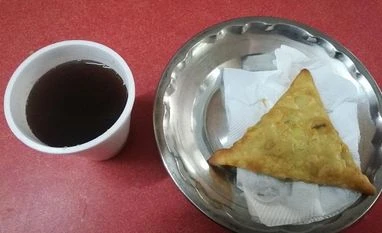
Sambusa with tea
Sambusa with tea
Ritwik Sharma
5 min read Last Updated : Mar 08 2019 | 10:09 PM IST
I had already chewed on the fact that the samosa isn’t Indian. So when a Somali kitchen in New Delhi revealed a basket filled with “sambusa”, the likeness of shape and name made it clear that the ubiquitous snack of Central Asian provenance had travelled far and wide and adopted local character like a master of disguise. (It has another name, too, in other parts: sambusak.)

I am at an unnamed joint next to the main road, where a lane turns into Khirki Extension, a South Delhi village that is home to refugees from Afghanistan, and several Arab and east African countries. It’s a discreet neighbourhood hangout for Somali men mostly — some returning from work or simply dropping by — as they chat, watch TV and eat together.

The fasha platter
The sambusa is flattened and triangular, compared to the crusty and conical samosa. Its chicken filling, mildly spiced with a hint of chilli and coriander, makes it a welcome entrée.

Mohammed, who runs the place, says a Somali woman cooks the food. For main course, they serve food that includes spaghetti. I opt for a spiced rice dish — similar to our pulao — which includes slices of meat and a tomato sauce. All of it, fresh, if a tad bland for an Indian palate, is customarily served with a banana.

My thumbs-up to the dishes is met with warm smiles, but Mohammed doesn’t entertain too many queries. In fact, an air of suspicion extends to his fellow Somalis the moment I show an interest in the place and their lives.

Sambusa with tea
In 2014, Khirki was the site of a midnight raid, led by an Aam Aadmi Party legislator and targeted at Africans, alleging they were involved in prostitution and drug trafficking. This, along with other instances of racist attacks, has only fuelled an uneasy relationship between locals and African nationals, it would seem.

Close by on a stretch of the main road, in Hauz Rani opposite the mammoth and bustling Max Hospital and Saket City Hospital, Afghan and Arab food is finding a visible space in the capital’s culinary melting pot.

At Albadiah Restaurant and Cafe, the fare is decidedly Central Asian. A common characteristic for all cuisines emerging from the émigrés populations here is how they encourage communal eating. A dish is served often on a single plate, no matter whether it is catering to one or four. It fosters ties and also an intimate community sentiment.

This fact dawned on me as I sat down to a Yemeni platter at Albadiah. The bread, a jumbo nan with black caraway seeds generously sprinkled over, suggested it could carry me over four meals. It was part of the fahsa, a Yemeni stew made of lamb cutlets and spices that include fenugreek, and kidney bean dry gravy, besides a mutton soup and a vegetable salad for starters.

Kabul Dubai Restaurant
What the portions did to my spirits, the flavours thankfully didn’t. They weren’t overpowering but light, delicious, and totally worth the reasonable rates (Rs 380). The waiter insisted I try a dessert called masoob, a delightful mix of tandoori bread, banana, milk and honey.

Yasir Ahmed, 26, a business partner and founder of Albadiah, left home in Taiz in Yemen in 2012 to study computer science in Aligarh in 2012. But during the ongoing civil war, his family lost their business and he stayed on in India as a refugee, like thousands of others who are recognised and supported by the United Nations High Commissioner for Refugees.

After graduating, Ahmed identified a market for the large number of people who come to India from the Arabian peninsula for medical treatment, and contract-supplied food to the hospitals in the area before deciding to start his own restaurant.

In Delhi for the last two years, he says 95 per cent of his customers are Arabs and Somalis.

A handful of Afghan eateries also cater to their own folks as well as Iranian, Tajik and Uzbek patients with an assortment of kebabs, kormas, rice, dumplings and bread, says Ghulam Reza, 24, who came to India in 2015 along with his parents and brother. He and his father work with the Kabul Dubai restaurant. In Khirki village, an Afghan baker called Ghulam Ali sells the relatively coarse khameeri roti. Ali has been living in Delhi with his family for three years and churns out his breads for individuals and restaurants.

Just as overseas cuisines are finding takers, Malayali restaurants serve a migrant population employed in the hospitals, besides others.

The challenges of low-key businesses and social tensions aside, these delectable cuisines are adding to the potpourri in a city of migrants. They may yet build bridges and bring cultures together. Like the globe-trotting samosa.

One subscription. Two world-class reads.

Already subscribed? Log in

Subscribe to read the full story →
*Subscribe to Business Standard digital and get complimentary access to The New York Times

Smart Quarterly

₹900

3 Months

₹300/Month

SAVE 25%

Smart Essential

₹2,700

1 Year

₹225/Month

SAVE 46%
*Complimentary New York Times access for the 2nd year will be given after 12 months

Super Saver

₹3,900

2 Years

₹162/Month

Subscribe

Renews automatically, cancel anytime

Here’s what’s included in our digital subscription plans

Exclusive premium stories online

  • Over 30 premium stories daily, handpicked by our editors

Complimentary Access to The New York Times

  • News, Games, Cooking, Audio, Wirecutter & The Athletic

Business Standard Epaper

  • Digital replica of our daily newspaper — with options to read, save, and share

Curated Newsletters

  • Insights on markets, finance, politics, tech, and more delivered to your inbox

Market Analysis & Investment Insights

  • In-depth market analysis & insights with access to The Smart Investor

Archives

  • Repository of articles and publications dating back to 1997

Ad-free Reading

  • Uninterrupted reading experience with no advertisements

Seamless Access Across All Devices

  • Access Business Standard across devices — mobile, tablet, or PC, via web or app

Next Story



