Delhi to see artificial rains? CPCB may deploy cloud seeding technology

The technique became well-known after it was used during the Beijing in the 2008 Olympics not just to have clear blue skies but also to avert spoilsport rains
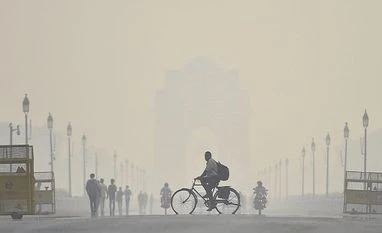
india gate during morning hours
BS Web Team
Last Updated : Nov 06 2018 | 3:02 PM IST

Don't want to miss the best from Business Standard?

Delhi may see rains this winter. With air quality going from bad to worse in a matter of days, authorities are planning to use 'cloud seeding' technology in a bid to ease the deteriorating situation in the national capital. The Economic Times said trials are likely to start after November 10 when the severe air quality is expected to ease a bit. The effort has been commissioned by CPCB. ISRO, IIT Kanpur and Indian Meteorological Department.

The technique became well-known after it was used in Beijing during the 2008 Olympics, not just to have clear blue skies, but also to avert spoilsport rains. 

The idea has been in the pipeline for quite some time now. In 2016, Delhi CM Arvind Kejriwal had floated the idea of using artificial rains to cleanse the city's air. Again, as the air quality worsened during winters in 2017, several reports said authorities were preparing for a trial run. However, no such effort has been made yet.

Interestingly, the Yogi Adityanath government in Uttar Pradesh was reported to be considering the use of artificial rain technology developed by the Indian Institute of Technology Kanpur (IIT-K) after subdued monsoons this year.

How is artificial rain effected using cloud seeding technology?

Online science magazine Physics.org explains it as follows:

Rainfall occurs when supercooled droplets of water – those that are still liquid but are at a temperature below the usual freezing point of zero centigrade – form ice crystals. Now too heavy to remain suspended in the air, these then fall, often melting on their way down to form rain.

Even in dry areas the air usually contains some water. This can be made to come together and form ice crystals by seeding the atmosphere with chemicals such as silver iodide or dry ice.

China skies to pour rivers?

In May 2018, Business Insider reported China was planning a 'Sky River' project that would be the largest artificial rain experiment in history, covering a land mass larger than Alaska and three times the size of Spain. However, no confirmation of the process being carried out could be found.

One subscription. Two world-class reads.

Already subscribed? Log in

Subscribe to read the full story →
*Subscribe to Business Standard digital and get complimentary access to The New York Times

Smart Quarterly

₹900

3 Months

₹300/Month

SAVE 25%

Smart Essential

₹2,700

1 Year

₹225/Month

SAVE 46%
*Complimentary New York Times access for the 2nd year will be given after 12 months

Super Saver

₹3,900

2 Years

₹162/Month

Subscribe

Renews automatically, cancel anytime

Here’s what’s included in our digital subscription plans

Exclusive premium stories online

  • Over 30 premium stories daily, handpicked by our editors

Complimentary Access to The New York Times

  • News, Games, Cooking, Audio, Wirecutter & The Athletic

Business Standard Epaper

  • Digital replica of our daily newspaper — with options to read, save, and share

Curated Newsletters

  • Insights on markets, finance, politics, tech, and more delivered to your inbox

Market Analysis & Investment Insights

  • In-depth market analysis & insights with access to The Smart Investor

Archives

  • Repository of articles and publications dating back to 1997

Ad-free Reading

  • Uninterrupted reading experience with no advertisements

Seamless Access Across All Devices

  • Access Business Standard across devices — mobile, tablet, or PC, via web or app

Next Story



