Former Prime Minister Manmohan Singh has said India's economic slowdown is the result of 'profound fear and distrust' among people who act as agents of economic growth. The tearing of our social fabric of trust is the fountainhead of our current economic malaise, he said.
Singh, who was the Prime Minister of India between 2004-14, has blamed the Modi government for "rupturing" the country's social fabric through "mala fide unless proven otherwise" doctrine of governance.
Citing that nominal GDP growth is at a 15-year low, unemployment is at a 45-year high, household consumption is at a four-decade low, and bad loans in banks are at an all-time high, the senior Congress leader said "these are mere manifestations of a deeper underlying malaise that plagues the nation’s economy today."
"Many industrialists tell me that they live in fear of harassment by government authorities. Bankers are reluctant to make new loans, for fear of retribution. Entrepreneurs are hesitant to put up fresh projects, for fear of failure attributed to ulterior motives," the senior Congress leader said in a piece he wrote for The Hindu newspaper.
Singh said policymakers in government and other institutions are scared to speak the truth or engage in intellectually honest policy discussions. Singh claimed that people's trust in independent institutions has been "severely eroded" and there is a lack of a support system for people to seek refuge against "unlawful tax harassment or unfair regulations."
He said the present government's suspicion that every industrialist, banker, policymaker, regulator, entrepreneur and citizen is out to defraud the government has led to a complete breakdown of trust in our society.
"This has halted economic development, with bankers unable to lend, industrialists unable to invest and policymakers unable to act," he added.
He further said that the Modi government seems to view everything and everyone through a tainted prism of suspicion and distrust, and has positioned itself as some saviour "resorting to foolhardy moral-policing policies such as demonetisation, which have proved to be ill-thought-out and catastrophic".
Singh said it is important that the social fabric torn by fear and distrust is stitched together for economic growth to revive and urged the government to shed its ‘mala fide-unless-proven-otherwise’ doctrine.
Stating that there is a sharp increase in retail inflation numbers, especially the food inflation figure, Singh said the 'real worrying trend" coupled with high unemployment will lead to "stagflation" and that it is prudent to act quickly to restore consumption demand through fiscal policy measures since the impact of monetary policy seems muted.
"It is my belief that India’s fragile economic situation calls for the twin policy actions of boosting demand through fiscal policy and reviving private investment through ‘social policy’ by inspiring trust and confidence in the economic participants in our society," he said.
In his piece, the former prime minister argued that India is a $3 trillion economy and not a "command and control economy that can be bullied or directed at will." It can not be managed by just managing headlines and media commentary, he wrote.

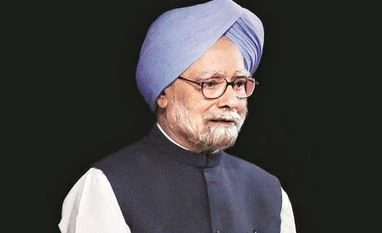 "Modi govt's doctrine of governance behind economic slowdown: Manmohan Singh")












 Connect with us on WhatsApp