Eighth BRICS Summit: Fantastic five
Business Standard New Delhi The sun, sand and sea of Goa will play host to some of the most powerful global leaders over the next two days, as India chairs the 8th BRICS Summit with a packed economic and political agenda.
From being an acronym denoting the four emerging economies of Brazil, Russia, India and China, coined by Goldman Sachs analysts in 2001, BRIC became a formal grouping by 2006. Four years later, South Africa joined, making it BRICS, a transcontinental alliance comprising 43 per cent of the world's population and 30 per cent of its GDP, with a 17 per cent share in world trade.
Starting essentially with economic issues of mutual interest, the agenda of BRICS meetings has widened to encompass topical global issues such as political and safety challenges. While India leads the group in GDP growth, it trails on other parameters such as per capita income, poverty and life expectancy.
Indian stocks have not done as well as Brazil and Russia in 2016 but have not slumped like the other two. A snapshot of key economic parameters

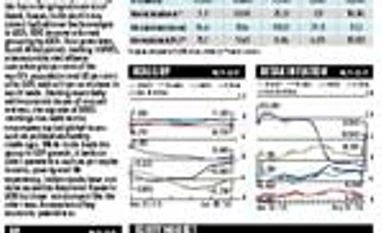 "Eighth BRICS Summit: Fantastic five")


 Connect with us on WhatsApp