Explained: How Covid-fuelled innovations will change our today, tomorrow

The pandemic has hastened medical and tech research, the benefits of which will be visible this year and beyond
Covid, innovations, medical devices, pulse oximeters
Devangshu Datta New Delhi
5 min read Last Updated : Jan 03 2022 | 6:05 AM IST
By general consensus, 2020 and 2021 have been among the most horrible years in living memory. The pandemic has taken a huge toll; it has nearly annihilated the travel and hospitality industry and forced the world to function in new “remote”, socially distanced ways.

But it has also led directly and indirectly to interesting technological innovations. Some of these will carry over into 2022 and lead to new benefits. And in some sectors, innovation continued despite the pandemic.

So here’s a list of technologies that could play a big role in 2022.

Messenger RNA vaccines really took off as labs worked overtime to find ways to combat Covid-19. Conventional vaccines inject a dead or weakened virus — the body responds by creating immunity as it recognises this foreign object. The difficulty is that this virus has to be harvested and killed, which is a tedious and dangerous process.

An mRNA vaccine instructs the body itself to produce a characteristic “piece” of the virus (the spike in the case of Covid-19), which triggers the immune response. The actual virus never enters the body. mRNA vaccines can be produced quickly, in huge quantities, without fears of actual infection.

We’re learnt a lot about mRNA vaccines, producing them in quantities, and stabilising them. The same technologies can be applied to combat diseases such as Zika, rabies, etc. We’ve learnt a lot about vaccines in general as well. A malaria vaccine that protects children was also launched for public use last year and there’s research into personalised cancer vaccines, which can protect cancer survivors in remission from a recurrence of their specific version of the disease.

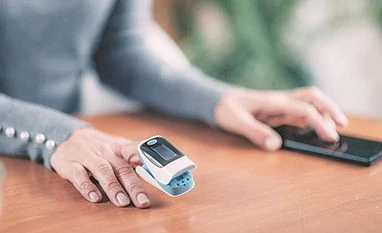
Smart medical devices: The next generation of pacemakers will be Bluetooth connected and so will smart pulse oximeters and other medical diagnostic tools. This means users can be monitored easily, and remotely from a smartphone. This is part and parcel of advances in telemedicine, which has been driven by the pandemic.

Satellite internet: Yes, 450 million or so Indians use smartphones. But what about the 800 million who don’t – how do they benefit from “Digital India”? It’s hard to offer broadband Internet to anybody who lives in the Himalayas, the Northeast, or the Nilgiris. Building terrestrial networks is very expensive and difficult, due to the terrain. Satellite access could give inhabitants of such geographies access to the digital economy we’re starting to take for granted in the plains. Again, the pandemic may have accelerated the demand for putting such technologies in place.

Digital contact tracing: This has worked in a hit-and-miss fashion when it comes to finding people who have been in proximity to Covid-positive folks. However, there are learnings from both successes and failures. On the flip side, every authoritarian regime is now implementing digital contact tracing models to track political opponents, rather than Covid-positive people.

GPT-3: A program that almost passes the Turing Test of holding conversations that seem human. Generative Pre-trained Transformer-3 uses Deep Learning to produce natural language text that can often seem human. Sometimes it fails. It’s also highlighted problems AI researchers are struggling with. The program may be “trained” by using reference text lifted off the internet. But then the writing style is influenced by profanity, racism and sexism because those traits are often visible on high-engagement sites.

Green Hydrogen: Green hydrogen may be a commercial reality soon. Green hydrogen is hydrogen produced with low-carbon technology by, for example, electrolysing water using solar electricity. Hydrogen can be used to drive fuel cells, where it’s recombined with oxygen to yield energy with a nice waste product — pure water. Most industrial hydrogen is still produced using high-carbon technologies and cracking ammonia, or crude. But green hydrogen holds much promise.

Electric vehicles: The last two years have been painful for the auto industry. Chip shortages and lack of demand have caused widespread losses. But demand is now said to exist for cheap two-wheelers versus public transport because of social distancing norms. Those two-wheelers are likely to be electric and we’ve seen lots of initiatives to churn out these machines and put a supportive new ecosystem in place.

TikTok: Now the world’s most visited site, despite the Indian government’s ban, which prevents 450 million users from accessing it easily. TikTok has generated phenomenal growth, overtaking Google, Facebook, Twitter, et al, on the basis of its path-breaking algorithm. Behavioural scientists and social media platforms are all playing catch-up to try and understand how TikTok managed this.

Building from Disasters

Great disasters often trigger technological or social change. The Bubonic Plague triggered labour reform – labour shortages gave peasants and skilled workmen the leverage to negotiate better terms vis-a-vis their feudal lords. World War I, with its poison gas attacks, led to the creation of new pesticides and it forced the induction of women into non-traditional jobs and led seamlessly to them demanding and getting the vote within a few years.

Vicious experiments in concentration camps during World War II led to the development of chemotherapy, and WWII accelerated the use of antibiotics like penicillin, and blood transfusion technology. It also led to great advances in computerisation and the invention of radar, four-wheel drive, etc., alongside the use of rockets, nuclear power and so on. Covid has provided its own set of drivers.

One subscription. Two world-class reads.

Already subscribed? Log in

Subscribe to read the full story →
*Subscribe to Business Standard digital and get complimentary access to The New York Times

Smart Quarterly

₹900

3 Months

₹300/Month

SAVE 25%

Smart Essential

₹2,700

1 Year

₹225/Month

SAVE 46%
*Complimentary New York Times access for the 2nd year will be given after 12 months

Super Saver

₹3,900

2 Years

₹162/Month

Subscribe

Renews automatically, cancel anytime

Here’s what’s included in our digital subscription plans

Exclusive premium stories online

  • Over 30 premium stories daily, handpicked by our editors

Complimentary Access to The New York Times

  • News, Games, Cooking, Audio, Wirecutter & The Athletic

Business Standard Epaper

  • Digital replica of our daily newspaper — with options to read, save, and share

Curated Newsletters

  • Insights on markets, finance, politics, tech, and more delivered to your inbox

Market Analysis & Investment Insights

  • In-depth market analysis & insights with access to The Smart Investor

Archives

  • Repository of articles and publications dating back to 1997

Ad-free Reading

  • Uninterrupted reading experience with no advertisements

Seamless Access Across All Devices

  • Access Business Standard across devices — mobile, tablet, or PC, via web or app

Topics :CoronavirusInnovationCoronavirus Vaccine

Next Story



