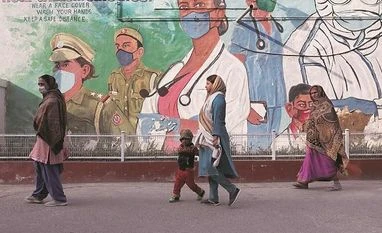
Shanni Vikram, a resident of Noida, was suffering from a suspected case of hypertension in 2021. Unfortunately, he had to give up on even a routine check-up as a malevolent second wave of the pandemic swept across India and deferred the treatment of patients other than those stricken by Covid-19.
The fact that his wife was expecting added to his fears of stepping out to consult a doctor in the face of a rampaging virus. Nearly one year, two lockdowns and countless attempts later, the 37-year-old finally visited his doctor this month.
There are millions like Vikram, who had to endure a halt in treatment as health budgets and funding focused on prioritising the fight against the pandemic worldwide and in India.
“Due to the fear of Covid, people stopped coming until someone was seriously ill. Even emergency services for other diseases had stopped during lockdown,” says Suranjit Chatterjee, senior consultant, internal medicine, Indraprastha Apollo Hos-pitals, New Delhi, who is treating Vikram.
During the pandemic, especially the lockdown phases, those suffering from lifestyle diseases such as high BP, cholesterol, diabetes and asthma were worst affected, says Chatterjee. “They took a backseat as patients continued with the same medication they had been prescribed before (Covid struck), or even stopped taking medicines.”
Covid managed to edge out nearly every disease in the priority race — from basics such as dental problems or eye disorders to the potentially fatal such as cancer. Along with these, access to childcare and maternity benefits and therapy for mental health also suffered.
In the last two years, India, which has the highest number of unreported tuberculosis (TB) cases, also saw a reversal of the progress made in the fight against a killer disease. The DOTS (directly observed treatment, short-course) programme for TB, under the National Health Mission (NHM), is a doorstep initiative where volunteers ensure patients take medicines on time. Counselling is a big part of it.
A report by Delhi-based charitable trust, Centre for Health and Social Justice (CHSJ), based on a survey funded by the World Health Organisation (WHO) and covering three states, presents a microcosmic view of the setback to TB and other patients in India during the pandemic.
According to a chapter of the report, which is yet to be published, 62 per cent patients received counselling services in Jharkhand, while in Karnataka the figure stood at 42.9 per cent and in Madhya Pradesh, it was only 18.6 per cent during the first lockdown in 2020.
Another crucial aspect of treating chronic illness is medicine intake. According to the CHSJ report, people faced problems on two fronts while purchasing medicines from health centres. Firstly, the health workers at the centres were saddled with extra workload due to Covid. Secondly, most patients were not able to reach the health centres due to the lockdowns.
The gains of the TB campaign can be attributed to the intervention where health workers ensure patients are taking medicines, says Sandhya Gautam, director, programmes, CHSJ. But, she adds, “because of Covid and the ensuing supply issues, medicines were not available at the health centres. Some health workers also said they lost touch with patients as they were overburdened due to Covid”.
In the three states mentioned above, a sizable fraction of patients of hypertension, diabetes and TB were unable to get regular medicines or go to a healthcare worker or health centre, while family planning awareness and HIV treatment also suffered during the pandemic (see box).
In the case of HIV, too, there has been underreporting during the pandemic. According to data from the Delhi State AIDS Control Society, 3,629 cases were reported in the national capital in 2020 and nearly 4,500 in 2021. Before Covid-19, 6,000 cases were detected annually.
Maternity and childcare benefits are a crucial part of the healthcare infrastructure in the country. The NHM allocates a Village Health, Sanitation and Nutrition Day (VHSND) every month in every village to provide comprehensive health services — including maternity and child health — prescribed under the mission.
According to the CHSJ report, VHSNDs stopped completely during the first lockdown. ASHA (accredited social health activist) workers were asked to stop the services for 2-3 months during the lockdown in 2020. As many as 45 per cent respondents in Jharkhand, 62.4 per cent in Madhya Pradesh and 8 per cent in Karnataka reported that child immunisation had completely stopped at the time.
Even after the lockdown was lifted, the programme did not pick up the pace. An ASHA worker in Jharkhand says immunisation could be resumed only in July 2021 and at the sub-centre level. “As sub-centres are far from villages, people hardly made it, while pregnant women were afraid of contracting the virus.”
According to Nameet Jerath, senior consultant, paediatrics, Indraprastha Apollo Hospitals, health drives and physical consultations were also affected in cities.
“After the second wave of Covid-19, many children came to me with a cough. It seemed to be a resurgence of TB. Had they come earlier, we could have detected and started treatment sooner. Treatment for cancer patients also had to be modified or delayed,” he says.
The experience of a beneficiary of these health services in Madhya Pradesh reflects what the denial of basic health care services has led to.
The person, who didn’t want to be named, went to a government hospital complaining of breathlessness during the first lockdown, but was not attended to. “I went to a quack, who gave me an injection and put me on a drip. It cost me Rs 500 for every visit and I went to him 10 times, which is way more than I could afford. But I didn’t have a choice,” he says.