Gilead's remdesivir slows disease progression in monkeys with Covid-19

Remdesivir did not show signs of respiratory disease and had reduced damage to the lungs
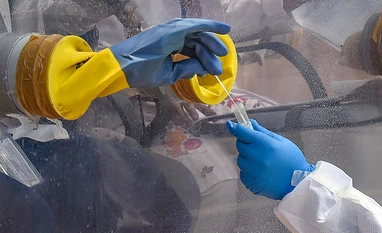
coronavirus, COVID 19, lockdown
FILE PIC: Medics collecting samples for swab tests from a COVID-19 mobile testing van | PTI photo
Agencies New Delhi
2 min read Last Updated : Jun 09 2020 | 6:21 PM IST
US pharma giant Gilead Sciences Inc's antiviral drug, remdesivir, prevented lung disease in macaques infected with the new coronavirus, according to a study published in medical journal Nature on Tuesday, Reuters reported.

Remdesivir has been cleared for emergency use in severely-ill patients in the United States, India and South Korea. Some European nations are also using it under compassionate programs.


Trials of the drug in humans are ongoing, and early data has shown the drug helped patients recover more quickly from the illness caused by the new coronavirus. In the study, 12 monkeys were deliberately infected with the coronavirus, and half of them were given early treatment with remdesivir.

Remdesivir, which is administered intravenously in hospital, is the first drug to show improvement in Covid-19 patients in formal clinical trials, and new information about its efficacy is being closely watched around the world, as nations battle the pandemic.

Macaques that received remdesivir did not show signs of respiratory disease and had reduced damage to the lungs, according to the study authors.


Gilead Sciences had on May 29 applied for marketing authorisation for remdesivir in India. The drug is being touted as a potential treatment for Covid-19. Gilead Sciences, the patent holder of the drug, has the complete data about the pre-clinical and clinical studies for remdesivir.

Gilead Sciences Inc has entered into non-exclusive licensing agreements with pharma firms, including three domestic majors Cipla, Jubilant Life Sciences and Hetero, for manufacture and distribution of remdesivir.

Remdesivir is being closely watched after the US Food and Drug Administration granted emergency use authorisation (EUA) last month, citing results from a US government study that showed the drug reduced hospitalisation stays by 31 per cent, or about four days, compared to a placebo.


One subscription. Two world-class reads.

Already subscribed? Log in

Subscribe to read the full story →
*Subscribe to Business Standard digital and get complimentary access to The New York Times

Smart Quarterly

₹900

3 Months

₹300/Month

SAVE 25%

Smart Essential

₹2,700

1 Year

₹225/Month

SAVE 46%
*Complimentary New York Times access for the 2nd year will be given after 12 months

Super Saver

₹3,900

2 Years

₹162/Month

Subscribe

Renews automatically, cancel anytime

Here’s what’s included in our digital subscription plans

Exclusive premium stories online

  • Over 30 premium stories daily, handpicked by our editors

Complimentary Access to The New York Times

  • News, Games, Cooking, Audio, Wirecutter & The Athletic

Business Standard Epaper

  • Digital replica of our daily newspaper — with options to read, save, and share

Curated Newsletters

  • Insights on markets, finance, politics, tech, and more delivered to your inbox

Market Analysis & Investment Insights

  • In-depth market analysis & insights with access to The Smart Investor

Archives

  • Repository of articles and publications dating back to 1997

Ad-free Reading

  • Uninterrupted reading experience with no advertisements

Seamless Access Across All Devices

  • Access Business Standard across devices — mobile, tablet, or PC, via web or app

Topics :CoronavirusLockdownVaccine

Next Story



