Google to give Wi-Fi access in 500 railway stations
Says India aims to provide broadband access to 600,000 villages
BS Reporter Bengaluru Global search giant Google will enable a little over 500 railway stations in India with Wi-Fi access, even as the country’s national open fibre network aims to provide broadband access to the 600,000 villages in the country.
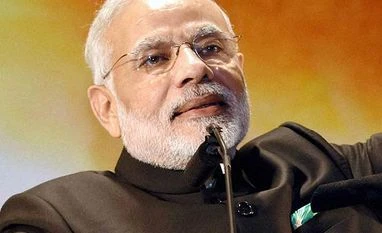
“We are expanding our public Wi-Fi hotspots. For example, we want to ensure that free Wi-Fi is not only there in airport lounges but also on our railway platforms. Teaming with Google, we will cover 500 railway stations in a short time,” Prime Minister Narendra Modi said at the Digital India dinner at San Jose, California, on Sunday morning.
Modi did not elaborate on the terms with Google. “We want our 1.25 billion citizens to be digitally connected. We already had broadband usage across India go up by 63 per cent last year. We need to accelerate this,” he said. “Building I-ways are as important as highways.”
Modi explained the aim was to turn India’s villages into smart economic hubs and connect our farmers better to markets, making them less vulnerable to the whims of weather. “For me, access also means that content should be in local languages. In a country with 22 official languages, it is a formidable but an important task,” he added. Modi said technology was a tool to empower and bridges the distance between hope and opportunity.”This is what sets us apart from the century that we have just left behind. There might be still some who see the digital economy as the tool of the rich, educated and the privileged. But, ask the taxi driver or the corner vendor in India what he has gained from his cellphone, and the debate gets settled.”
Adding: “I see technology as a means to empower and as a tool that bridges the distance between hope and opportunity.
Social media is reducing social barriers. It connects people on the strength of human values, not identities.”
He said technology was advancing citizen empowerment and democracy, that once drew their strength from constitutions, and forcing governments to respond in “24 minutes instead of 24 hours” and help India’s “transformation on a scale that is unmatched in human history”.
“Nothing else will do in a country with 800 million youth under the age of 35 years, impatient for change and eager to achieve it. We will transform governance, making it more transparent, accountable, accessible and participative. I seak of e-governance as a foundation of better governance -- efficient, economical and effective,” he declared.

 "Google to give Wi-Fi access in 500 railway stations")


 Connect with us on WhatsApp