The Supreme Court today held as invalid and unconstitutional the legal provision which makes sanction of competent authority mandatory for CBI to probe a corruption case against an officer of joint secretary-rank or above, saying it has the propensity of shielding the corrupt.
A five-judge Constitution bench headed by Chief Justice R M Lodha delivered the judgement after examining Section 6A of the Delhi Special Police Establishment Act (DSPEA), which protects top bureaucrats from being investigated in corruption cases without prior approval.
"We hold Section 6A of the Act, which requires Central Government's approval for the offences under the Prevention of Corruption Act (PCA) to make inquiry against officer of the rank of joint secretary and above, as invalid and violative of Article 14 of the Constitution," the bench, also comprising justices A K Patnaik, S J Mukhopadhaya, Dipak Misra and F M I Kalifulla, said.
It said there cannot be any classification of officers for the purpose of inquiry of offence under the PCA.
"The corrupt public servants, higher or lower in rank, are the birds of same feather and have to be dealt with equally," the court observed.
Maintaining that "corruption is an enemy of nation", the bench said that it is difficult to make classification of officers in graft cases as it is against the mandate of the PCA.
It said that the prior approval under Section 6A would result, indirectly, in halting the investigation and if the CBI is not allowed to carry on the preliminary inquiry how the investigation can proceed.
"We are of the view that there can be no distinction between certain class of officials for inquiry of the offences under the PCA.
"How can the status of officials be of any relevance in the offence under PCA and any distinction by way of Section 6A of the DSPEA makes it violative of Article 14," the bench said, adding that the protection as provided in Section 6A has the propensity of shielding the corrupt.
The court said there cannot be any exemption from equal treatment and any official facing allegations of corruption has to be treated with the same process of inquiry.

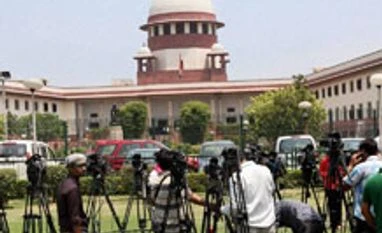 "Govt permission not needed to probe officers above Joint Secretary: SC")


 Connect with us on WhatsApp