
Home Ministry starts process of eviction and sale of enemy properties
The enemy properties are vested with the Custodian of Enemy Property for India (CEPI), an authority created under the Enemy Property Act
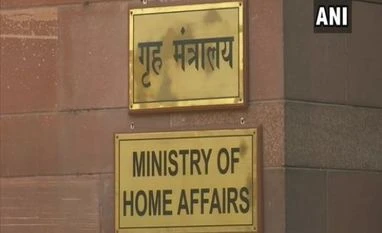 "Home Ministry starts process of eviction and sale of enemy properties")
WebinarsNew
Deep DiveNew
Explore Business Standard
The enemy properties are vested with the Custodian of Enemy Property for India (CEPI), an authority created under the Enemy Property Act
The Union Home Ministry has started the process for eviction and sale of enemy properties, the immovable assets left behind by people who have taken citizenship of Pakistan and China.
There are a total of 12,611 establishments called enemy property, roughly estimated to be worth over Rs 1 lakh crore, in the country.
The enemy properties are vested with the Custodian of Enemy Property for India (CEPI), an authority created under the Enemy Property Act.
According to a Home ministry notification, the guidelines for disposal of the enemy properties have been changed under which the process for eviction of enemy properties now shall be initiated with the help of the District Magistrate or Deputy Commissioner concerned before the sale of properties.
In case of the enemy properties valued below Rs 1 crore, the custodian shall offer for purchase to the occupant first and if offer of purchase is refused by the occupant, then the enemy property shall be disposed of in accordance with the procedure specified in the guidelines, the notification said.
Those enemy properties having valuation of Rs one crore and below Rs 100 crore, shall be disposed of by the CEPI through e-auction or otherwise as may be decided by the central government and at the rate determined by the Enemy Property Disposal Committee.
The e-auction platform of public enterprise, the Metal Scrap Trade Corporation Limited, shall be used by the CEPI for e-auction of enemy properties, the home ministry said.
The government has earned over Rs 3,400 crore from disposal of enemy properties, mostly movable assets like shares and gold, officials said.
None of the 12,611 immovable enemy property has been monetised so far by the government.
The Home ministry has already launched a national survey of enemy properties, spread across 20 states and three Union Territories, with a purpose to identify and subsequently monetise all such properties.
The first-of-its-kind national survey by the Directorate General of Defence Estates (DGDE) will assess the present condition and value of the enemy properties identified by the CEPI.
The government formed a Group of Ministers (GoM), headed by Union Home minister Amit Shah, in 2020 to supervise monetisation of enemy properties.
Out of the 12,611 properties vested with the CEPI, a total of 12,485 were related to Pakistani nationals and 126 to Chinese citizens.
The highest number of enemy properties were found in Uttar Pradesh (6,255 properties), followed by West Bengal (4,088 properties), Delhi (659), Goa (295), Maharashtra (208), Telangana (158), Gujarat (151), Tripura (105), Bihar (94), Madhya Pradesh (94), Chhattisgarh (78) and Haryana (71).
There are 71 enemy properties in Kerala, 69 in Uttarakhand, 67 in Tamil Nadu, 57 in Meghalaya, 29 in Assam, 24 in Karnataka, 22 in Rajasthan, 10 in Jharkhand, four in Daman and Diu and one each in Andhra Pradesh and Andaman and Nicobar Islands.
(Only the headline and picture of this report may have been reworked by the Business Standard staff; the rest of the content is auto-generated from a syndicated feed.)
First Published: Mar 19 2023 | 3:49 PM IST


 Connect with us on WhatsApp