House battle won over J&K's special status, but legal opinion split

Article 35(A) came into being in the Constitution on May 14, 1954, allowing the J&K Assembly to define 'permanent resident' of the state and accorded special rights and privileges to them

parliament
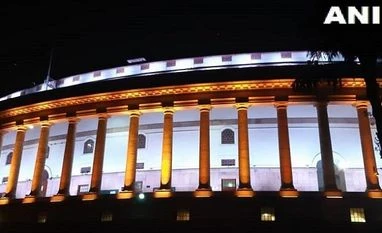
Parliament illuminated after resolution to revoke Article 370 & 35A was passed in the Rajya Sabha
PTIAashish Aryan New Delhi
4 min read Last Updated : Aug 06 2019 | 1:02 AM IST

Don't want to miss the best from Business Standard?

The Centre’s decision to abrogate Article 370, which gave special status to Jammu and Kashmir (J&K), has polarised opinion among legal experts. Some of them have supported it, validating its legality, while others believe it is fraught with serious political consequences.

Senior advocate and constitutional law expert Rakesh Dwivedi said the decision is completely legal and there was no chance that a plea against it will succeed. “It was a long overdue, historic step,” he said. “It is a welcome step. Kashmir was also open for outsiders so I don’t understand why there should be Article 35(A).”

Article 35(A) came into being in the Constitution on May 14, 1954, allowing the J&K Assembly to define “permanent resident” of the state and accorded special rights and privileges to them.

But, not everyone agreed with Dwivedi.

Former Union Law minister and senior Congress leader Ashwini Kumar, who is also an advocate, said the decision was “fraught with serious political consequences”. “That the government would move such a proposal in Parliament without extensive consultations with Opposition parties was unthinkable,” he added.

The decision of the government also flies in face of a 2016 judgment by a two-judge apex court Bench of (Retired) Justice Kurian Joseph and Justice Rohinton Fali Nariman, which had held that the provision had over the years acquired permanent space in the Constitution and could not be abrogated now.

In the judgment, the two-judge Bench had said though it can be noticed in the marginal note states that Article 370 is a temporary provision with respect to J&K, unlike Article 369, which is also a temporary provision limited in point of time to five years from the commencement of this Constitution, no such limit is to be found in Article 370.

Former attorney general Soli Sorabjee said “nothing revolutionary has been done”. Laws not applicable to the state so far will now be applicable.

Sorabjee was referring to earlier provisions of Article 370, which had provided that state Assembly the power to enforce or not enforce central law in J&K.

Former solicitor general and senior advocate Harish Salve termed the legal situation pertaining to Articles 370 and 35A “very complicated”. He referred to the fact that earlier Article 35A was brought into being by the government in 1954 by issuing the Constitution (Application to Jammu and Kashmir) Order instead of a constitutional amendment.

He added that several presidential orders were issued under Article 35A by successive governments.

“It is a very complicated legal situation… It appears they (Centre) have superseded the old Presidential order,” Salve said.

On the issue of possible legal challenge to the decision, he said, “Nowadays everything comes before the Supreme Court whether it should or should not.”

Discussing the issue of Article 35A, Dwivedi said historically people from other places settled in Kashmir. “Buddhism and Islam came from outside... So why close doors of Kashmir for jobs and land now on the plea of the local population being overrun?”

“The logic of protecting state subjects or permanent residents was fallacious. Kashmir had never closed its doors to outsiders. Closed-doorism is foreign to its culture. Kashmir has been a cradle where Buddhism, Hinduism and Islam all found place to thrive,” Dwivedi added.


In his view, Indian citizens have a fundamental right to reside and settle in any part of the territory of India, including J&K, and “this is an important feature of national integrity.”

“Inclusion of Article 370 in the Constitution was never intended to create a partial accession or to perpetuate Instrument of Accession based autonomy for Jammu and Kashmir forever. They were intended to permanently unite the state in an indestructible Union,” he said.

The Instrument of Accession of Jammu and Kashmir to India was executed by Maharaja Hari Singh of the then princely state on October 26, 1947.

According to Congress leader Kumar, the government’s decision is bound to be challenged in the Supreme Court.

One subscription. Two world-class reads.

Already subscribed? Log in

Subscribe to read the full story →
*Subscribe to Business Standard digital and get complimentary access to The New York Times

Smart Quarterly

₹900

3 Months

₹300/Month

SAVE 25%

Smart Essential

₹2,700

1 Year

₹225/Month

SAVE 46%
*Complimentary New York Times access for the 2nd year will be given after 12 months

Super Saver

₹3,900

2 Years

₹162/Month

Subscribe

Renews automatically, cancel anytime

Here’s what’s included in our digital subscription plans

Exclusive premium stories online

  • Over 30 premium stories daily, handpicked by our editors

Complimentary Access to The New York Times

  • News, Games, Cooking, Audio, Wirecutter & The Athletic

Business Standard Epaper

  • Digital replica of our daily newspaper — with options to read, save, and share

Curated Newsletters

  • Insights on markets, finance, politics, tech, and more delivered to your inbox

Market Analysis & Investment Insights

  • In-depth market analysis & insights with access to The Smart Investor

Archives

  • Repository of articles and publications dating back to 1997

Ad-free Reading

  • Uninterrupted reading experience with no advertisements

Seamless Access Across All Devices

  • Access Business Standard across devices — mobile, tablet, or PC, via web or app

Topics :Amit ShahArticle 35AArticle 370Jammu and Kashmir

Next Story




