
How India missed an opportunity to resolve dispute with China in the 1980s
An exclusive edited excerpt from former secretary Shyam Saran's How India Sees the World
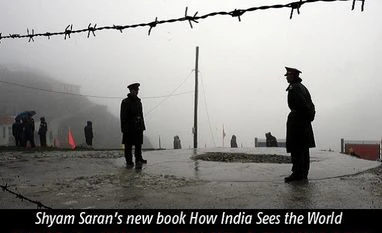 "How India missed an opportunity to resolve dispute with China in the 1980s")
premium
Explore Business Standard
An exclusive edited excerpt from former secretary Shyam Saran's How India Sees the World
‘Manufactured history’
In reviewing the archival material now available and the more contemporary Chinese narratives, the following conclusions may be made:
• Until 1958, when India formally conveyed to China that its territory in the western sector included the area between the Kunlun and the Karakoram ranges, including Aksai Chin, and that the Chinese had violated Indian territorial integrity by building the Aksai Chin road, the alignment in the eastern sector defined by the McMahon Line was not disputed. The subsequent claims in this sector were raised by China only as a bargaining chip to acquire territory in the west that did not belong to it in the first place. Had China been convinced of its claim in the west there would have been no reason to suggest this trade-off.
• The Chinese empire, even at its maximum extent under the Qing dynasty, did not claim territory south of the Kunlun range. On the other hand, the exercise of administrative jurisdiction over this territory by the Hunza principality west of the Karakoram pass and by the Kashmir state east of the pass is well documented. Even if the Indian claims are considered somewhat tenuous, there was no Chinese presence in these areas at all until the early 1950s.
• The Ladakh–Tibet boundary had been well established and acknowledged by the Qing administration. It was in the 1962 operations that Chinese forces created an alignment further west, which is, broadly, the current LAC. It is important to underline these conclusions because of the revisionist interpretations of the India–China border issue, not only among foreign scholars but in India too. There appears to be an unstated attitude that since India lost the 1962 war, the Chinese territorial assertions stand validated. While Indian claims have been repeatedly and selectively subjected to close scrutiny, Chinese declarations have rarely come under unbiased and critical examination. In fact, they are not very different in nature and intent from China’s current claim on the South China Sea as its ‘historic waters’. Much of this is based on nothing more than accounts of the voyages of the Ming admiral Zheng He in the fifteenth century. This has been rightly and universally rejected by the International Court of Justice.
And yet, in the case of the India–China border dispute, a similar recourse to manufactured history appears to raise few notes of dissent, even among Indian analysts.
Already subscribed? Log in
Subscribe to read the full story →

3 Months
₹300/Month
1 Year
₹225/Month
2 Years
₹162/Month
Renews automatically, cancel anytime

Over 30 premium stories daily, handpicked by our editors


News, Games, Cooking, Audio, Wirecutter & The Athletic
Digital replica of our daily newspaper — with options to read, save, and share


Insights on markets, finance, politics, tech, and more delivered to your inbox
In-depth market analysis & insights with access to The Smart Investor


Repository of articles and publications dating back to 1997
Uninterrupted reading experience with no advertisements


Access Business Standard across devices — mobile, tablet, or PC, via web or app
First Published: Sep 08 2017 | 11:10 PM IST


