It was in the '90s that internet users first fell prey to email scammers. The method involved luring people with a commission of a few million dollars for transferring billions of dollars to the account of a Nigerian prince. The scam came to be popularly known as the 419 scam, after the section of the Nigerian Criminal Code which outlaws the practice. In 2014, the story of the Nigerian prince may be outdated, but the scammers are still around. According to the Federal Bureau of Investigation, "Nigerian cyber criminals have turned at-home internet users into unsuspecting accomplices. Investigators are calling it purchase order fraud, and the perpetrators are extremely skillful."
One of the newest methods of the scammers involves duping companies, particularly in the export and import business, by hacking their emails, and obtaining information about their buyers. What follows are fake orders from the customers with 30-day credit. By the time the business house realises that the order was a prank to dupe it, it is invariably too late. About two months back, when an exporter from Rajasthan received a promotional email, he never thought clicking it would cost him nearly $1,000. The spam mail not only compromised his password but also corrupted his inbox. An unidentified malware, which worked in stealth, created filters that kept the exporter in the dark about the emails being sent out of his account. Sitting miles away, the scammers successfully diverted a payment of $1,000, which the exporter was to receive, to their bank account in the United Kingdom.
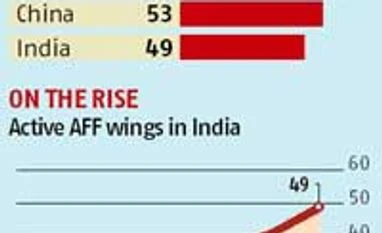
A widespread problem "Reports of payment diversion are coming from almost all states. More than 100 complaints could have been registered so far," says Rakshit Tandon, advisor, cybercrime redress cell of the Uttar Pradesh Police. Online financial frauds come in varied forms like auction, credit-debit card , check and lottery frauds, which are together known as 419 AFF (advance-fee fraud) crimes. In India, there are 49 AFF scam rings with 1,610 active members, the fifth highest in the world, according to a report by Ultrascan Advanced Global Investigations released in July. In 2005, there were only three AFF rings with 79 active resident members. Active resident members stay in one country to dupe residents in another country - the basic modus- operandi for most fraudsters -so as to work in different geographies and jurisdictions, the report says. This apart, there are also a number of local rings that recruit poor people to perform tasks like opening a bank account or registering a company in the area of operations. India suffered financial losses of nearly $870 million on account of AFF frauds in 2013, the fourth highest in the world, up from $32 million in 2006.
The three major production centres for counterfeit checks are Nigeria, India and Canada, according to the Ultrascan report. The National Crime Bureau records state that between 2012 and 2013, the number of reported cybercrimes shot up from 2,876 to nearly 4,356. "Starting January, we have seen a drastic increase in the number of financial scams in the online space. Every day, we get at least three or four new complains, which was never the case before," says Mukesh Choudhary, a cybercrime expert.
Online financial frauds are highly organised and technology-driven. The 419's headoffice is in Nigeria, but like an international conglomerate, they have set up local branches in many nations, which in turn create a thick web of multi-level marketing, according to the Ultrascan report. The first step towards setting up a scam network in a foreign land is to open a bank account. After settling down in a safe den, preferably near the airport for an easy escape in case of trouble, the members begin operations by making random phone calls. In addition, social media is used to reach out to people. Over the call, they offer commission of as much as Rs 1,500 for opening a bank account. "Of every 100 calls made, at least five people agree to accept the offer," says Choudhary.
Once a person agrees to open a bank account, he is offered higher commission for roping in others for opening more bank accounts-thus creating a chain. The bank accounts are used to park money obtained as advance fee against fraudulent lotteries, job promises or any other alluring promise. By the time the police knock at the door of the original account holders, the scammers are already out of the country or change their address and phone numbers. Much of the ground work is outsourced to locals rings, who are lured by easy money. All they have to do is to use their identity proof to open bank accounts and other registrations at the government level. During 2013, the fraudsters had no trouble opening bank accounts (under false pretensions) in Singapore, South Korea, Japan, India and China, according to the Ultrascan report.
Staying a step ahead Frauds these days are custom made for every target group. Take, for instance, the newest iPhone fraud, designed for those who seek discounted deals on the web. About a year ago, when Akash (name changed), an engineering student, fished out a deal offering a locked iPhone, to be shipped from the United States, at less than half the marked price on an e-commerce website, he wasted no time in placing an order. The next day, Akash got a call from a US number saying that by mistake the retailer has shipped three instead of one phone. Two of Akash's friends were now waiting for their iPhones to be delivered after paying half the cost in advance. The three together ended up paying close to Rs 45, 000 to the fake sellers. No iPhone has been delivered to the three till date, and the number from which they got the call does not exist anymore.
The debit-credit card scams involve a different trick. In these scams, a caller identifying himself as an employee of the bank obtains the CVV number which is the card security code needed for online transactions. "The caller often tells customers that their account would be frozen if they do not tell the account details. In some cases, they even successfully change the registered mobile number and password of internet bank account," Choudhury says. Last year, when the manager of a public-sector bank received a sham mail from the "Reserve Bank of India" asking him to submit his bank details and password, he did not think twice before clicking the send icon. Soon, Rs 25,000 was deducted from his bank account.
Job scams are another form of cybercrime which are rampant. M Kumar, who works as an assistant manager of a reputed oil company, recently got a call from a company called Job Dhamaka offering him a job at a Mexican oil company. Kumar was requested to register himself on the company's website for Rs 24,336. Once the transaction was done, representatives of Job Dhamaka were nowhere to be heard.
Another time-tested fraudulent trick that continues to thrive is the online lottery scam. Perhaps, the most innocent victim of the fraud was Ratan Kumar Malbisoi, a 41-year-old unemployed youth from Odisha, who earlier this year travelled 1,000 miles to BBC India's office in Delhi to claim a prize money of nearly £300,000 by one "BBC national lottery".

 "How scammers have a field day in India")


 Connect with us on WhatsApp