
How the Bollywood sports biopic 83 furthers masculinity, nationalist view
Today, Bollywood is demonstrating a renewed purpose of creating new national myths, and it is on full display in the new film 83
 "How the Bollywood sports biopic 83 furthers masculinity, nationalist view")
premium
Explore Business Standard
Today, Bollywood is demonstrating a renewed purpose of creating new national myths, and it is on full display in the new film 83
This isn’t a new phenomenon. Bollywood’s formula of promoting nationalist rhetoric via glorification of past heroes or events can be traced back to the early years of the Marathi theatre.
In the 19th century, Marathi theatre staged historical events still within living memory: re-telling stories of the great Maratha Empire, which covered much of the Indian subcontinent from 1645 to 1818.
With the subcontinent under British rule, popular plays furthered the calls of the “extremist” political leader Bal Gangadhar Tilak (1856-1920) for swaraj, or self-rule. The ever-present Maratha past became a major source of inspiration for the playwrights and served the cause of emergent Hindu nationalism.
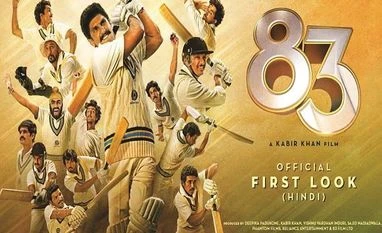
Today, Bollywood is demonstrating a renewed purpose of creating new national myths, and it is on full display in the new film 83, a sports biopic based on India’s first win at the cricket world cup in 1983.
We follow the team in the months leading up to their defeat of the West Indies at Lord’s Cricket Ground in London under new captain Kapil Dev (Ranveer Singh).
A team of seemingly inglorious young Indian men emerge victorious on the cricket field in a film about regaining honour and masculine pride for the country.
It is a film about much more than just the 1983 world cup. Like a propagandist tool, 83 draws on the rich sport tradition of India and serves the nationalist cause.
Sports, the final frontier of masculinity
This celebration of the nationalist cause is most visible in 83’s representation of gender.
At the centre of the film is team captain Kapil Dev, a popular sports hero of the 80s. His authenticity and gentlemanly demeanour warrant affection from people of all ages, and the film shows his masculinity acting as a stabilising force for the nation in flux.
But also inherent in this masculine ideal is a belief in the Hindu nationalist vision of hegemonic masculinity: a belief in the “normality” of men’s subordination of women and other minorities.
83 celebrates the boys club with masculine banter. Each player is focused on proving their masculine status as an ideal son who wants to make his father proud; a responsible husband who protects and provides for his wife; and, most importantly, a worthy son of the motherland the whole nation reveres.
The players are often called “freedom fighters” to underline their combative spirit, and Kapil Dev’s iconic bat is referred to as his “sword”: politically charged language which reverbs in calls from some Hindu leaders for Muslim genocide.
The female ideal is also depicted according to the nationalist view: Indian women should be dignified, docile and a possessor of superior spirituality.
Kapil Dev’s wife, Romi (Deepika Padukone), is a morale booster. She is a virtuous cheerleader who remains subordinate. Her responsibility is to remind the dispirited Kapil of the importance of his duty as she asks him to “play for that little boy inside you”.
This trope of the little boy, who embodies and helps channel the hopes and dreams of a young nation, is exploited throughout the film. This boy lends an air of innocence and purity to the cause of winning.
The audience is called on to align with his hopes and disappointment – and ultimately support the Indian heroes out there to win.
Typical of nationalist rhetoric, 83 depicts rival teams and other nationalities as caricatures. West Indies fans are invariably seen wearing bright prints and dancing to African drums – the Indian fans let go of differences and unite to support the team. The West Indies’ cricketers are chewing gum – the Indians are routinely speaking to their families on long distance calls.
Globally, Bollywood provides a lens to understand Indian culture and has proved to be India’s most effective soft power in maintaining diplomatic ties.
But in India, Bollywood often acts as an agent of the ideological work of the far-right nationalist government. Biopics and period films emphasise the cult of personality and celebrate patriotic feats.
Given the growing spectacle of communal violence in India and the increased popularity of depicting Bollywood heroes as mercenaries, one ought to question what 83 says to and about the audience.
83 is not simply a retelling of the story of a sports team. It is a product of both the emerging brand nationalism and Bollywood’s tapping into the political zeitgeist.
With its celebration of Hindu masculine power, 83 feels like a film which is working to win consent for the populist and controversial leader Narendra Modi – and make the audience more susceptible to political manipulation and control.
Radhika Raghav, Sessional Lecturer and Tutor in Gender Studies and Sociology, University of Otago
This article is republished from The Conversation under a Creative Commons license. Read the original article.
Already subscribed? Log in
Subscribe to read the full story →

3 Months
₹300/Month
1 Year
₹225/Month
2 Years
₹162/Month
Renews automatically, cancel anytime

Over 30 premium stories daily, handpicked by our editors


News, Games, Cooking, Audio, Wirecutter & The Athletic
Digital replica of our daily newspaper — with options to read, save, and share


Insights on markets, finance, politics, tech, and more delivered to your inbox
In-depth market analysis & insights with access to The Smart Investor


Repository of articles and publications dating back to 1997
Uninterrupted reading experience with no advertisements


Access Business Standard across devices — mobile, tablet, or PC, via web or app
First Published: Jan 27 2022 | 10:44 AM IST


