3 min read Last Updated : Apr 10 2020 | 5:43 PM IST
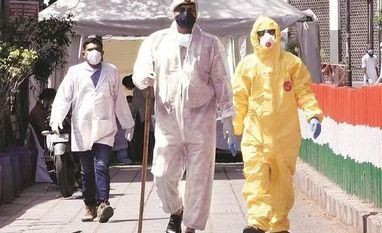
Amid the shortage of personal protection equipment (PPE) for the doctors and frontline staff who are fighting against coronavirus, the Indian Institute of Technology (IIT) Kanpur has developed an ultra-low cost PPE kit.
Titled Polyethylene-based Improvised Protective Equipment under Scarcity (PIPES) kit, it has been designed by a team of IIT Kanpur researchers and industry partners. It is based on thin cylindrical rolls/pipes of polyethylene (polythene), which is non-porous and commonly used material for industrial packaging and making plastic-bags.
According to Dr Nitin Gupta, professor of the IIT Kanpur Biosciences and Bioengineering (BSBE) department, the existing PPE kits were not only expensive, but not easily available in the market owing to the high demand.
The design and the production process of the PIPES kit is open source, so that a small or medium scale factory could start manufacturing them in large quantities within a few days, he said. These alternative kits could be mass produced for less than Rs 100, substantially lower than the standard PPE available in the market.
“Our kit may not be as comfortable and visually appealing as a standard PPE kit, but it meets the primary goal of protection against contamination,” Gupta observed underlining the short supply of these gear for doctors, health workers, police etc in the high risk environment.
Meanwhile, IIT Kanpur and Ansys – a renowned global engineering simulation company – have entered into a corporate social responsibility (CSR) agreement with a consortium led by the Institute to assist in the development of Nocca V110 ventilators to fight covid-19 outbreak in India.
Under the consortium, NOCCA Robotics, an IIT Kanpur incubated startup, is developing indigenised rapidly scalable, low-cost invasive ventilators with the aim of promoting healthcare, including preventive health care.
Engineers at NOCCA Robotics are already testing the prototype of a portable machine on artificial lungs, a prosthetic device that provides oxygen and removes carbon dioxide from the blood. The machines that can be tested on patients will be out soon.
Once the beta prototype is out, the team targets to produce 30,000 units by May 2020. As a part of their CSR initiative, Ansys has offered a grant, which will be utilised for procuring materials, testing, trials and other expenses.
“We are happy to have Ansys on board for the development of this indigenous low-cost ventilator. With their funding and technical support, we are one step closer to bringing this critical device to our healthcare providers,” IIT Kanpur director Prof Abhay Karandikar said.
“Ansys has always been committed towards industry-academia collaborations and we are in this fight together. We hope that our support by being the first company to back the start-up will help in bringing out the Nocca V110 ventilators to serve humanity,” Ansys area vice president (India and South Asia Pacific) Rafiq Somani said.