
India among largest emitters, could cause extreme climate impacts: Study
The results highlight the outsized role these emitters play in driving warming and temperature extremes around the world.
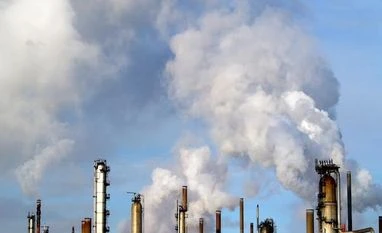 "India among largest emitters, could cause extreme climate impacts: Study")
WebinarsNew
Deep DiveNew
Explore Business Standard
The results highlight the outsized role these emitters play in driving warming and temperature extremes around the world.
The emissions of just five economies -- India, China, the US, the EU and Russia -- over the period 1991-2030 will double the number of countries experiencing extreme hot years every second year by 2030, according to a new scientific paper published in Communications Earth and Environment.
The results highlight the outsized role these emitters play in driving warming and temperature extremes around the world.
The study led by scientists at ETH Zurich and Climate Analytics looks at the impacts of these top five emitters over two periods: 1991-2030, and 2016-2030, over which they will contribute 52 per cent and 53 per cent of global emissions respectively.
Under current emissions reductions targets, 92 per cent of all countries are expected to experience extreme hot years every second year by 2030, twice as many countries as without the 1991-2030 emissions from the top five polluters (46 per cent).
Notably, 15 per cent of this increase would be attributable to the emissions of these five economies between 2016 and 2030, after the Paris Agreement was signed.
"Our work shows that over a relatively short-time period, the emissions of these five economies will have a strong impact on extreme heat experienced around the globe by 2030. We're talking about annual mean temperatures that would only be experienced once every 100 years in preindustrial times happening every second year", said ETH Zurich researcher Lea Beusch, lead author of the study.
The paper also looked at the per capita emissions of these major emitters. It found that if all countries had the same projected per capita emissions as the US -- the highest per capita emitter in the group -- in the period after the Paris Agreement was signed (2016-2030), global mean warming in 2030 would be 0.4 degree Celsius higher than under current pledged emission reductions.
This is a full 0.5 degree higher than if all countries followed the same per capita emissions trajectory of India, which has the lowest emissions per capita in the high emitters group.
The study comes in the wake of the COP26 Glasgow Climate Pact that requests countries to revisit their 2030 climate targets to align them with the 2015 Paris Agreement temperature goal of 1.5 degrees Celsius.
"Our results underscore that the actions of the world's top emitters will have a huge impact on our global temperature trajectory in this decade. How they respond to the COP26 outcome will be fundamental to whether 1.5 degrees Celsius stays within reach -- none of their targets are currently sufficient", said Alexander Nauels of Climate Analytics, who co-authored the study.
--IANS
vg/dpb
(Only the headline and picture of this report may have been reworked by the Business Standard staff; the rest of the content is auto-generated from a syndicated feed.)
First Published: Jan 07 2022 | 1:39 PM IST


 Connect with us on WhatsApp