India Coronavirus Dispatch: Do we need to shift focus, narrative on virus?

Odisha's peculiar problem, triple whammy for nurses tending to corona patients, go-ahead for Phase-3 trials of Oxford vaccine--a round-up of news on how the country is dealing with the pandemic
Coronavirus, Healthcare worker
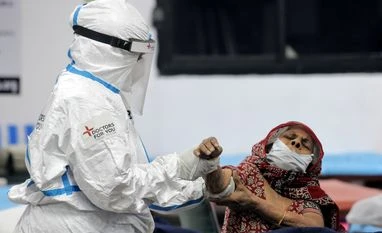
A health worker wearing PPE kit checks an old woman at Commonwealth games village COVID care center, in New Delhi
Shreegireesh Jalihal New Delhi
4 min read Last Updated : Aug 04 2020 | 3:33 PM IST
Managing Covid-19

Ganjam’s dubious distinctions: In Odisha, a rare situation has unfolded. The state’s worst-affected district is not the one that houses its capital. Ganjam, instead, is bearing that burden. A high influx of migrants, the fact that it’s a border district, and a deficient institutional response might explain this exception. Some experts suggest that a ‘very virulent’ strain of the virus brought in by returnees from Gujarat might be to blame. Read more here.

A Doctors’ Prescription: According to this Doctor, there is an urgent need to shift the narrative from raising alarm over the virus to discussing ways to navigate through the new reality. He suggests normalising the virus while avoiding the risk of trivialising it and moving from stories of fear, stigma and tragedy to more hopeful, morale-boosting and pragmatic ones. Read more here.

Nurses’ Concerns: Over two thousand health workers, a particularly vulnerable group, have been infected by the coronavirus since the pandemic began. Nurses have had to face the triple threat of pay cuts, annulment of contracts and hospitals not following necessary precautions. Nurse associations have been repeatedly highlighting the constant state of insecurity and disregard in which the frontline workers have to work. Read more here.

Haryana’s recovering, too: Haryana has emerged as the only state after Delhi to have hit a recovery rate above 80 per cent. Haryana’s recovery rate, according to the state bulletin, on Monday evening stood at 81.97 per cent. Haryana’s fatality rate of 1.18 per cent is lower than the national capital’s which stands at 2.91 per cent. Read more here.

Interview

Curing it with Kindness: Dr Bonnie Henry, the much-celebrated face of British Columbia’s fight against Covid-19, says the fundamental lesson of the pandemic is the need to pay attention to our interactions with nature. She points at SARS, MERS and H1N1 as examples of warning signs. She highlights the need for effective communication in managing a public health crisis - a takeaway from her experience in dealing with SARS - and says that building trust is key. She stresses on the “need to be open and transparent about what we know, and about how we will adapt as needed, based on what we learn.” Read the interview here.

Understanding Covid-19

New parameters required: An epidemiologist argues that the different stages of the pandemic require different metrics to gauge our performance in the battle against Covid-19. He says recovery rate and doubling rate data was useful in the initial stages but less so today. The focus on aggregate number of tests is also pointless, with testing rate being the key. He also seeks break up of data on the basis of the type of test to get a better picture of the pandemic. Rapid Antigen Tests, for example, lead to a lot of false negatives and could push cases into the blindspot of officials. Read more here.

Antibiotic administration: A new study has revealed that bacterial co-infections are low in patients hospitalised with Covid-19. The patients administered antibiotics for treating bacterial infections far outnumber the ones who actually need it, the study establishes. These findings are a part of a meta-analysis of 28 studies representing 3,848 patients and published in Clinical Microbiology and Infection. Read more here.

AIIMS trials: Of those who evinced interest in AIIMS’ trials for indigenous vaccince, Covaxin, 20% already have antibodies. “In almost 20% of the volunteers, we have found antibodies. This means they have already been infected,” says an official monitoring the trials. The medical institute received over 3,500 applicants for the human trials. Read more here.

Oxford trials in India: India’s drug regulator has given the go-ahead for conducting phase-III trials of the Oxford Covid-19 vaccine candidate in India. Phase-III trials are crucial since they test the effectiveness of the potential vaccine on a large and diverse population hence helping to understand its performance on a much larger population. India, thus, is a crucial demographic that needs to be represented in these trials. Read more about the significance of these trials here.

One subscription. Two world-class reads.

Already subscribed? Log in

Subscribe to read the full story →
*Subscribe to Business Standard digital and get complimentary access to The New York Times

Smart Quarterly

₹900

3 Months

₹300/Month

SAVE 25%

Smart Essential

₹2,700

1 Year

₹225/Month

SAVE 46%
*Complimentary New York Times access for the 2nd year will be given after 12 months

Super Saver

₹3,900

2 Years

₹162/Month

Subscribe

Renews automatically, cancel anytime

Here’s what’s included in our digital subscription plans

Exclusive premium stories online

  • Over 30 premium stories daily, handpicked by our editors

Complimentary Access to The New York Times

  • News, Games, Cooking, Audio, Wirecutter & The Athletic

Business Standard Epaper

  • Digital replica of our daily newspaper — with options to read, save, and share

Curated Newsletters

  • Insights on markets, finance, politics, tech, and more delivered to your inbox

Market Analysis & Investment Insights

  • In-depth market analysis & insights with access to The Smart Investor

Archives

  • Repository of articles and publications dating back to 1997

Ad-free Reading

  • Uninterrupted reading experience with no advertisements

Seamless Access Across All Devices

  • Access Business Standard across devices — mobile, tablet, or PC, via web or app

Topics :CoronavirusCoronavirus VaccineOdisha COVID-19

Next Story




