India Coronavirus Dispatch: Monday sees lowest new cases in six weeks

Unemployment spike threatens Maharashtra economy, Mumbai's second sero-survey, and do heaters spread Covid?--news on how the country is dealing with the pandemic
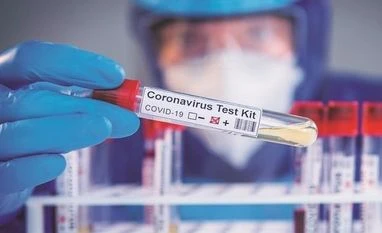
Coronavirus
Winter is around the corner and people are rightly worried about the shape the pandemic will take in colder months
Shreegireesh Jalihal New Delhi
4 min read Last Updated : Oct 06 2020 | 3:22 PM IST
Maharashtra’s unemployment issue: An increase in Maharashtra’s August unemployment rate is threatening the revival of its Covid-hit economy, according to a government report. It further stated that unemployment rate had climbed from 3.9 per cent in July to 6.2 per cent in August. The latest uptick in unemployment, according to a presentation made to the state’s CM, was due to imposition of micro lockdowns in several parts of the state, the loss of work under MGNREGS and the end of kharif sowing season. Further, many ministers in the state voiced their opposition to micro lockdowns. The state’s fiscal managers are concerned over the situation as they momentum that was gained in June waning off. The report further stated that industries and the services sector are expected to remain under pressure owing to a demand contraction. Read more here

Maharashtra’s anti-spitting fine: Maharashtra’s public health department has managed to collect just Rs 4,860 in fine across the entire state since May for spitting in public places. This is despite the state putting in place a hefty fine to curb the possibility of the virus spreading because of spitting. A lack of personnel to enforce the fine seems to have resulted in the low collections. Only Satara, Pune and Bhandara have collected fines. Pune collected Rs 2,600, Bhandara Rs 2,200 and Satara Rs 60. According to the notification, the fine goes up to Rs 1,000 for the first violation along with one day of social service. While fines for not masking up properly have managed to reach a good amount, implementing the anti-spitting notification still remains lax. Read more here

In Numbers

Lowest drop in six weeks: Monday saw the lowest daily new cases reported in six weeks with just 61,000 additions across the country. India had been reporting between 60,000 and 70,000 cases a day back in August. Monday’s low detections, however, could be on account of the low testing on Sunday — a pattern noticed every week — but the overall slowdown in the pandemic can’t be denied. Maharashtra recorded only 10,200 cases, its lowest since August 17. Andhra Pradesh had only about 4,200 cases, the lowest since July 20. Bihar, meanwhile, saw less than 1,000 cases for the first time since July 11, and Delhi recorded less than 2,000 cases after nearly a month. The Sunday preceding this fall saw 990,000 tests, which is not significantly lower than the average 1.17 million tests seen per day in the last 6 days. Even the daily positivity ratio stood at 5.62 per cent. Read more here


Comment

Mumbai’s second sero-survey: Mumbai’s second sero-survey threw up, according to the author, ‘perplexing’ results. The prevalence of antibodies in slum-dwellers actually went down over time. Possible explanations for this could be plenty: the drop could be on account of sampling errors or there might actually have been a drop in the cases reflected in the fall in antibodies. The fact that a demographic shift has taken place over weeks cannot be ruled out, either. A lot of migrant workers returned back to the wards surveyed this time around. A more disturbing possibility is that tests are not picking up past infections. It has to also be kept in mind that Covid-19 antibodies wane off rather quickly. For antibodies to be detected, it would have to be be present in significant levels. Read more here

Understanding Covid-19

Do heaters spread Covid? Winter is around the corner and people are rightly worried about the shape the pandemic will take in colder months. Experts say that heating systems can possibly spread coronavirus but the likelihood is too little. Heating systems also bring air from outside into the room, diluting the indoor air supply. But there is always a possibility that the fan can blow the droplets from one person to another. This would happen if the room is not well-ventilated and an infected person stands directly in front of the fan. Further, infection rates within households have been low so the risk is further reduced. Read more here

One subscription. Two world-class reads.

Already subscribed? Log in

Subscribe to read the full story →
*Subscribe to Business Standard digital and get complimentary access to The New York Times

Smart Quarterly

₹900

3 Months

₹300/Month

SAVE 25%

Smart Essential

₹2,700

1 Year

₹225/Month

SAVE 46%
*Complimentary New York Times access for the 2nd year will be given after 12 months

Super Saver

₹3,900

2 Years

₹162/Month

Subscribe

Renews automatically, cancel anytime

Here’s what’s included in our digital subscription plans

Exclusive premium stories online

  • Over 30 premium stories daily, handpicked by our editors

Complimentary Access to The New York Times

  • News, Games, Cooking, Audio, Wirecutter & The Athletic

Business Standard Epaper

  • Digital replica of our daily newspaper — with options to read, save, and share

Curated Newsletters

  • Insights on markets, finance, politics, tech, and more delivered to your inbox

Market Analysis & Investment Insights

  • In-depth market analysis & insights with access to The Smart Investor

Archives

  • Repository of articles and publications dating back to 1997

Ad-free Reading

  • Uninterrupted reading experience with no advertisements

Seamless Access Across All Devices

  • Access Business Standard across devices — mobile, tablet, or PC, via web or app

Topics :CoronavirusLockdownCommunity TransmissionContainment ZoneContact TracingDharavi SlumCoronavirus TestsCoronavirus Vaccine

Next Story



