
India may see behavioural change in urban mobility in Covid-19 aftermath
In a statement, the ministry said it has issued a detailed advisory as to how the nation needs to move ahead in these testing times
 "India may see behavioural change in urban mobility in Covid-19 aftermath")
WebinarsNew
Deep DiveNew
Explore Business Standard
In a statement, the ministry said it has issued a detailed advisory as to how the nation needs to move ahead in these testing times
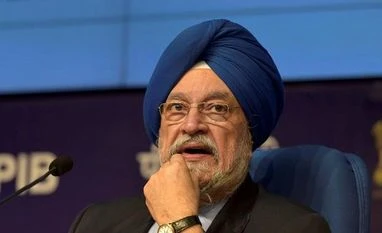
Union Housing and Urban Affairs Minister Hardeep Singh Puri said on Monday that India is likely to experience a behavioural change in urban mobility in the aftermath of the COVID-19 pandemic.
Addressingthe 13th Urban Mobility India Conference on the theme 'Emerging Trends in Urban Mobility', he said the future of mobility is about striving towards environment-friendly, integrated, automated and personalised travel on demand.
New advancements, like intelligent transportation systems and traffic management applications, are in the pipeline for enhanced mobility in major cities, the minister said.
"In the aftermath of the COVID-19 pandemic, India is likely to experience a behavioural change in urban mobility. This crisis also presents an opportunity to guide the recovery of urban transport towards long-term development goals," Puri said.
Investment in infrastructure to address more effective circulation and interchange of people and goods will have an economic multiplier effect, both in job-creation in the present and boosting growth and productivity in the future, he said.
In a statement, the ministry said it has issued a detailed advisory as to how the nation needs to move ahead in these testing times.
It rests on three key pillars -- promotion of public transport system, leveraging technological advancements and penetration of NMT systems in the urban transport paradigm.
"Various studies show that about 16-57 per cent of urban commuters are pedestrian and about 30-40 per cent use bicycles depending on the size of the city.
"Considering this as an opportunity, elevating the priority of these modes gives travellers another private vehicle alternative, which is clean, safe, secured particularly if it is integrated with other modes and affordable for all," the ministry said.
It stated that non-motorised transport will occupy the prime, non-negotiable, position in every form of urban mobility discourse and intervention.
(Only the headline and picture of this report may have been reworked by the Business Standard staff; the rest of the content is auto-generated from a syndicated feed.)
First Published: Nov 09 2020 | 5:15 PM IST


 Connect with us on WhatsApp