
India must work on ties with Nepal to keep China at bay: Report
Emphasis the importance of legal education and awareness among the border dwellers
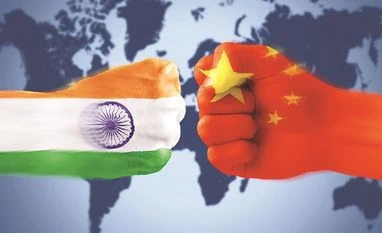 "India must work on ties with Nepal to keep China at bay: Report")
WebinarsNew
Deep DiveNew
Explore Business Standard
Emphasis the importance of legal education and awareness among the border dwellers
The advancement of ties between Nepal and China calls for a revision and possibly better management of India's ties with Nepal, a recent report has said.
The Observer Research Foundation report also highlights China's increasing influence in Nepal's trade, security and domestic policies.
"Over the last few years, bilateral ties between China and Nepal have become more strategic. This is evident in two broad ways," said the report titled "India's Connectivity with its Himalayan Neighbours: Possibilities and Challenges."
"First, the two countries have signed a number of bilateral agreements and initiatives in the last couple of years; Nepal is almost ready to sign the One Belt, One Road initiative."
"Second, China is investing time, energy and resources in nurturing its perception among not only Nepali policy-makers, but among industrialists, bureaucrats, and the general public," it said.
While the other neighbouring country, Bhutan, continues to favour India as a more significant partner than China, the report stresses India's concern over Bhutan's temporary withdrawal from the BBIN MVA (Bangladesh-Bhutan-India-Nepal Motor Vehicles Agreement).
Underscoring the importance of border management for uninterrupted trade and security, the report calls for strengthening joint border patrols along the line of India's open border with Nepal and Bhutan and necessary upgrade of existing facilities and resources in the border areas.
"As an example, the establishment of banking facilities at border points is necessary. Banking facilities would not only facilitate trade, it might also help to reduce the volume of informal trade," it said.
It also emphasises the importance of legal education and awareness among the border dwellers so as to make them aware of the domestic laws applicable in each other's country.
The report advocates going beyond the traditional forms of rail and road connectivity to share critical information between the countries, such as the news of a sudden strike in either part of the border that may halt the movement of trade and people.
It suggests timely implementation of existing protocols in various infrastructure projects and other projects of bilateral cooperation in order to decrease the cost and finish the project under stipulated time limit.
Terming the bilateral understanding between two neighbouring countries as the rudimentary element of how they would perceive each other, the report says that a strong bilateral relation between India and its neighbours would enhance their ties.
"The contact between the India government and the people in the border areas of Nepal and Bhutan is vital as a large part of the cross-border trade and economy is run by the border dwellers," the report adds.
(Only the headline and picture of this report may have been reworked by the Business Standard staff; the rest of the content is auto-generated from a syndicated feed.)
First Published: Jul 20 2017 | 4:15 PM IST


 Connect with us on WhatsApp