
India-Namibia team to discuss uranium supply: Pranab Mukherjee
NSG membership has become a high-profile thorny issue ahead of the NSG members' meeting in Seoul next week
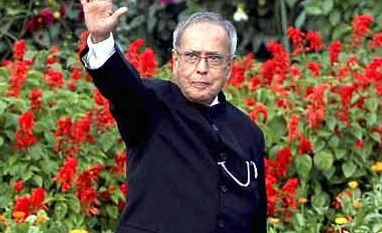 "India-Namibia team to discuss uranium supply: Pranab Mukherjee")
WebinarsNew
Deep DiveNew
Explore Business Standard
NSG membership has become a high-profile thorny issue ahead of the NSG members' meeting in Seoul next week
India has urged Namibia to make good a deal signed in 2009 on supply of uranium for India's nuclear power reactors.
The issue was raised during the just-concluded visit to the southwest African nation by President Pranab Mukherjee, when Namibian President Hage Geingob assured that he would explore ways to supply the same.
A technical team from both sides would meet "at the earliest" to discuss "the way forward", Mukherjee told the media.
"Supply has not yet taken place," the President said in response to a query.
He said it was "not true" that India had to be a member of the Nuclear Suppliers' Group (NSG) to avail of Namibian uranium.
The NSG membership has become a high-profile thorny issue ahead of the NSG members' meeting in Seoul next week.
India has gained support from the United States and even Switzerland, Mexico and others who earlier nursed reservations about its bid to the NSG. On the other side is a China-led campaign to oppose it, ostensibly to support Pakistan that has also entered into a "me-too" gambit, if only to scuttle India's chances.
However, the NSG seems a more recent obstacle, while Namibia and many African nations, members of the African Union, have an understanding that they would not deal with a non-signatory of the Nuclear Non-Proliferation Treaty (NPT), which India is.
But so is Pakistan whose case, either way, is being championed by China.
There is 'confusion' among the Africans, an Indian official said, without elaborating.
Diplomatic sources suspect the Chinese hand influenced the Africans, which is where the NPT, the NSG and other issues get mixed up.
No immediate solution is in sight, whatever the NSG's decision at its Seoul meeting.
Raising the 2009 pact was one of the ticklish issues that figured during the President's three-nation tour of Ghana, Cote d'Ivoire and Namibia that saw a mix of symbolisms on India's ties with Africa and several commitments by India to help the three nations develop faster.
Mukherjee was very effusive in expressing sentiments about India's past ties and the common colonial experience, while pledging financial and project commitments.
First Published: Jun 18 2016 | 4:28 PM IST


 Connect with us on WhatsApp