
It's not just you, work during coronavirus has become harder than before
The pandemic is increasingly understood as a shock, an event beyond our control that disrupted our normal ways of working and living
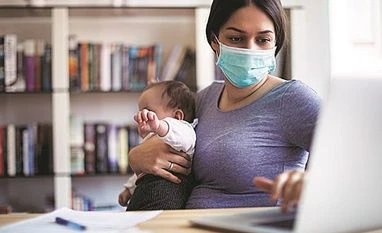 "It's not just you, work during coronavirus has become harder than before")
premium
WebinarsNew
Deep DiveNew
Explore Business Standard
The pandemic is increasingly understood as a shock, an event beyond our control that disrupted our normal ways of working and living
We are just beginning to understand the long-term consequences of this change, for worker wellbeing, for how work is carried out and for society and economies as a whole. As a work psychologist, I am interested in how these pandemic-induced changes affect individual people’s wellbeing, their behaviour and their attitudes – and what the broader effects for society as a whole might be.
The pandemic is increasingly understood as a shock, an event beyond our control that disrupted our normal ways of working and living. This shock was more disruptive for some than others. Some people saw their workload skyrocket and had to work around the clock to meet the new demands they were facing - for example, healthcare workers or supermarket staff. Others suddenly had to work from home, having to adapt to different procedures and trying to balance the challenges of family life with work.
Many lost their jobs, and some their occupations as entire sectors closed down. Someone who worked very hard to become an actor or an aerospace engineer or a pub landlord will not want to work in a different profession, let alone be trained for it. In this case, someone has not only lost their livelihood but also part of their identity. This can have dramatic consequences for how people feel about themselves and their place in society.
Different to previous recessions, some countries have introduced furlough schemes. Despite the protection they receive as a result, those on furlough still frequently report strong worries and uncertainty about job loss. Perceived job insecurity is recognised as a serious stressor affecting mental and physical health but also work behaviour and even political attitudes. Meanwhile, actual unemployment in the UK, even with the furlough, has risen to 4.8 per cent, and the Bank of England is predicting this will double by 2021.
These effects of furlough and job loss are compounded by income loss. The pandemic has pushed more people into (working) poverty, as increased levels of consumer debt and a rise in first-time foodbank users show. The resulting financial strain and precarity is likely to magnify stress from the challenges that people face.
The majority of people still have their jobs, even if they have sometimes changed beyond recognition. Newly introduced social distancing rules and COVID health regulations affect how people interact with customers, patients, and colleagues at work. Working from home comes with its own challenges, such as changes in communication, technological difficulties, interference of private life or higher self-organising demands, to name just a few.
All of these changes demand a great deal of adjustment from people, requiring an extra amount of effort, grit and creativity to make them work. This is happening against the backdrop of a pandemic that has already forced us to adjust to undesirable patterns of living, with reduced and changed types of social interactions and increased health worries.
Seen from a stress perspective, the different types of work-related changes that people experienced and had to deal with can be seen as extra demands, pushed onto an already busy and disrupted life. So don’t be surprised if you feel exhausted by the end of 2020.
Stress, as we know from research, comes with several side-effects related to how we communicate and interact with others. So if we see people making more errors or sometimes being uncivil, we need to understand this within the current context of extra demands. Give yourself (and others) a break. The person who reacted weirdly might simply be exhausted.
But there may also be a silver lining to this strange year. What 2020 has shown us is that people have shown incredible resilience and a talent and creativity to adapt and navigate dramatic changes at work and life. Despite a changed social reality, travel bans and everything else, many people have found a way to still run their businesses, to socially interact with work colleagues, to structure their days and manage their workloads. Looking back and reflecting on the accomplishments this year should give us some confidence and belief in our own abilities to manage challenges.
And while our individual journeys through this pandemic have been unique, we all have navigated this year together. It will be a memory that we share, together. So who knows, perhaps the knowledge that we have suffered through this as a community can bring us closer, and bridge older divides. We might or might not experience such a dramatic change in life and work again during our lifetimes, but if we do, I hope we can look back to 2020 and trust in our experience and skill in dealing with the unforeseen.
Eva Selenko, Senior Lecturer in Work Psychology, Loughborough University
This article is republished from The Conversation under a Creative Commons license. Read the original article.
Already subscribed? Log in
Subscribe to read the full story →

3 Months
₹300/Month
1 Year
₹225/Month
2 Years
₹162/Month
Renews automatically, cancel anytime

Premium stories handpicked daily by our editors


News, Games, Cooking, Audio, Wirecutter & The Athletic
Digital replica of our daily newspaper — with options to read, save, and share


Insights on markets, finance, politics, tech, and more delivered to your inbox
In-depth market analysis & insights with access to The Smart Investor


Repository of articles and publications dating back to 1997
Uninterrupted reading experience with no advertisements


Access Business Standard across devices — mobile, tablet, or PC, via web or app
First Published: Nov 21 2020 | 11:00 AM IST


 Connect with us on WhatsApp