The Supreme Court today agreed to hear after Diwali pleas challenging Article 35 A, relating to special rights and privileges of permanent residents of Jammu and Kashmir.
A bench headed by Justice J S Khehar accepted the plea of the Jammu and Kashmir state government that the pleas challenging Article 35 A be heard after Diwali.
Senior advocate Rakesh Dwivedi and Advocate Shoeb Alam mentioned the matter before a bench also comprising Justices Dipak Misra and D Y Chandrachud that even the Centre has no objection if the pleas are taken up after Diwali.
"All the pleas will be taken up for hearing after Diwali," the bench said.
Earlier the apex court had favoured hearing of the matter by a five-judge constitution bench in case the Article is ultra vires of the Constitution or if there is any procedural lapse.
The court had said that a three-judge bench will hear the matter and refer it to a five-judge bench if necessary.
The apex court was hearing a plea filed by Charu Wali Khanna challenging Article 35A of the Constitution and Section 6 of the Jammu and Kashmir Constitution which deal with the "permanent residents" of the state.
The plea has challenged certain provisions of the Constitution which deny property right to a woman who marries a person from outside the state. The provision, which makes such women from the state lose rights over property, also applies to her son.
Article 35A, which was added to the Constitution by a Presidential Order in 1954, accords special rights and privileges to the citizens of the Jammu and Kashmir.
It also empowers the state's legislature to frame any law without attracting a challenge on grounds of violating the Right to Equality of people from other states or any other right under the Indian Constitution.
"Section 6 of the Jammu and Kashmir Constitution restricts the basic right of women to marry a man of their choice by not giving the heirs any right to property if the woman marries a man not holding the Permanent Resident Certificate.
"Her children are denied a permanent resident certificate thereby considering them illegitimate -- not given any right to such a woman's property even if she is a permanent resident of Jammu and Kashmir," the plea said.
While Jammu and Kashmir's Non-Permanent Resident Certificate holders can vote in Lok Sabha elections, the same individual is barred to vote in local elections in the state.

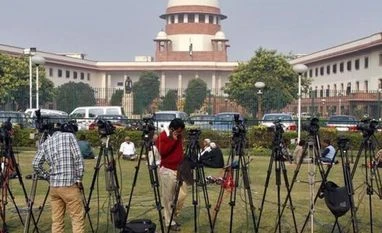 "J&K special status: SC to hear plea challenging Article 35A after Diwali")


 Connect with us on WhatsApp