The Board of Control for Cricket in India (BCCI) is the richest cricket governing body in the world, but there was a time when it was no match for the big boys. The unanimous opinion among cricket aficionados is the board’s standing is the result of the business acumen of Jagmohan Dalmiya.
It was Dalmiya’s decision to open sports broadcasting to private channels in the country. Until the late 1990s, Doordarshan held sole rights to broadcasting BCCI events in India. Dalmiya along with IS Bindra, another cricket administrator, took on the state and fought for air waves to be opened up in cricket broadcasting.
“He not only opened the door to private broadcasters, but he called for bids. Earlier, when Doordarshan had the rights, it would relay the live match and allow other channels to use its feed for a fee with a delay of 10 minutes. This money never reached the BCCI. Hence the move to invite private channels to bid was a great idea,” says Piyush Pandey, executive chairman and creative director of Ogilvy & Mather India and South Asia. This meant more money for the game and players. Pandey describes Dalmiya’s decision to auction telecast rights as “a win-win-win situation” in which private broadcasters, viewers and players all benefitted.
Advertising guru and founder of Genesis Film Production, Prahalad Kakkar agrees. “What this meant was better cricket. The private guys upped the standards of production and brought more viewers to the game. This raised the advertising potential and brought more money into cricket broadcasting. Let’s not forget what it meant for the players in the long run. While they were better paid, they were also more visible, which led to them to good endorsement opportunities.”
Cricketers like Virat Kohli and MS Dhoni charge Rs 8-10 crore a year for endorsements, which is largely due to the fact that cricket means eyeballs. The ecosystem saw money pouring in and the result was the BCCI’s rise among the boards of cricket-playing nations.
Dalmiya opened up a whole array of possibilities for advertising revenue. Matches featuring India can earn a broadcaster Rs 4-6 lakh per 10 second slot of advertising, depending on the opposing side.
“Cricket is the undisputed number one in sports. As broadcasters see it, it is worth the expenditure since the returns are so good. Brands know the reach of cricket in the country. Take the Indian Premier League, for example. Controversy notwithstanding, the tournament is a favourite with advertisers. Dalmiya’s genius was not only in bringing private broadcasters on board, but in the timing too. He began this campaign when cricket started growing in popularity and by the late 1990s it was at its peak,” says a broadcast industry professional.
Star India, the current broadcast rights holder, will be shelling out close to Rs 4,600 crore over 2012-2018. Multi Screen Media, the company that holds the rights to air the Indian Premier League till 2017, forks out around Rs 700-800 crore a year.
The son of a construction baron in Kolkata, Dalmiya joined cricket administration in 1979 and took over as BCCI treasurer in 1983. He was instrumental in bringing the ICC Cricket World Cup to India in 1987 and then again in 1996, even though it was not the sub-continent’s turn. He also won the ICC elections in 1997 and is credited with turning it around. Media reports say when Dalmiya took over as president, cricket’s worldwide governing body had just $37,000 in its account, which grew to $11 million by the end of his tenure.

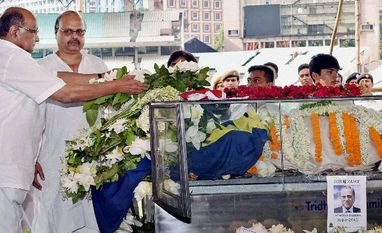 "Jagmohan Dalmiya: The man who revolutionised sports broadcast in India")


 Connect with us on WhatsApp