Jahan-e-Khusrau returns with Sufi poetry performed by some powerful voices

The lineup of the three-day festival includes performances by Shubha Mudgal, Hans Raj Hans, Kailash Kher, Malini Awasthi
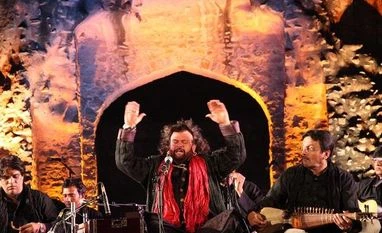
Jahan-e-Khusrau returns with Sufi poetry performed by some powerful voices
Veer Arjun Singh
Last Updated : Mar 03 2018 | 5:54 AM IST
In the corridors of power of the Delhi Sultanate in the 13th century, Amir Khusrau transcended the barriers of language, culture and religion to become a timeless icon. His verses have since passed from one generation to the next and empowered myriad emotions with the art of expression. The commemoration of his death, thus, is a celebration of his life — and all life. As dusk falls on Humayun’s Tomb in Delhi next week, not far from Khusrau’s resting place, his mysticism will come alive again through the power of music.

Jahan-e-Khusrau, or the World Sufi Music Festival, is that juncture where traditions meet and flow into a single stream of Sufism. For 13 years, since it was first held in 2001, filmmaker and revivalist Muzaffar Ali has been leafing through the odes, old and new, and bringing together some of the most powerful musical artistes.

 Recreating the magic of Sufism each year that enables one to surrender to a higher power is a challenge that is met with years of experience and limitless passion.

“Every year, we dig out new poetry and find new artistes to produce and perform it,” says Ali. He says the more established ones always want to come back. “Sometimes I don’t know how to say no.”

Ali honours Khusrau for being a blender of cultures, languages and different forms of music. Khusrau wrote in Persian and in Hindavi, and mixed the two into Urdu. He is widely regarded as the founder of qawwali. His poem, “Zehaal-e-Miskeen”, which has been adapted by the likes of Gulzar and performed by the Sabri Brothers as well as Lata Mangeshkar, flows from Persian into Braj bhasha.

The lineup of the three-day festival includes performances by Shubha Mudgal, Hans Raj Hans, Kailash Kher, Malini Awasthi and first-timer Pooja Gaitonde, along with the World Ethnic Music Ensemble. The festival has the reputation of bringing together ruhani (soulful) musicians from around the world.

Ali has also directed a two-part ballet, Yamuna: Ek Darya Prem Ka, which visualises the influence of the river in Khusrau’s life and ours, and how it speaks of the “timelessness of the human soul”. The mission is a call to action to save the dying river.

Awasthi will bring together Awadhi and Bhojpuri as well as folk traditions in Khusrau’s words. “It’s a divine experience. Sufi is not a form of singing but a mental state of self-discovery. Such festivals educate, sensitise and make people experience the meaning of Sufism,” says Awasthi. She will also perform a qawwali this year.

Mudgal, who has been associated with the festival for years, says Ali’s sense of artistry and design at the archeological spectacle of Humayun’s Tomb makes for a wonderful ambience. “In the Sufi silsila, the texts are often in Urdu and Farsi (Persian), which Ali picks for every artiste. It’s a new and enriching experience for both artistes and audience,” she says. It’s a source of joy for Mudgal to see younger people experiencing Sufi music at such festivals and falling in love with it.

Kher, along with his band, Kailasa, has been waiting to perform at the festival for years, but the logistics did not match up until this year. He says he recognises a passionate and learned audience when he sees one, and that, he says, elevates his performance. “You don’t always like the songs that you sing, especially in Bollywood.

Like singers, even listeners have an ear for good music. And when you find such an audience, you go all out,” says Kher.

Ali is known to hunt out new talent and Gaitonde, who is from Mumbai, believes he zeroed in on her through her music on YouTube. Sufi music has been a part of Gaitonde’s life since she started learning classical music as a child and she does not think there’s a need for revival. “Khusrau is recited around the world. And it’s amazing to see how the farmaish (request) from younger crowds these days is sufiana music over mainstream Bollywood numbers,” says Gaitonde.

As Kher puts it, “You find what you seek.” And festivals such as these only lend a stage to the seekers.
‘Jahan-e-Khusrau’ will be held at Arab ki Sarai, Humayun’s Tomb in New Delhi from March 9 to March 11

One subscription. Two world-class reads.

Already subscribed? Log in

Subscribe to read the full story →
*Subscribe to Business Standard digital and get complimentary access to The New York Times

Smart Quarterly

₹900

3 Months

₹300/Month

SAVE 25%

Smart Essential

₹2,700

1 Year

₹225/Month

SAVE 46%
*Complimentary New York Times access for the 2nd year will be given after 12 months

Super Saver

₹3,900

2 Years

₹162/Month

Subscribe

Renews automatically, cancel anytime

Here’s what’s included in our digital subscription plans

Exclusive premium stories online

  • Over 30 premium stories daily, handpicked by our editors

Complimentary Access to The New York Times

  • News, Games, Cooking, Audio, Wirecutter & The Athletic

Business Standard Epaper

  • Digital replica of our daily newspaper — with options to read, save, and share

Curated Newsletters

  • Insights on markets, finance, politics, tech, and more delivered to your inbox

Market Analysis & Investment Insights

  • In-depth market analysis & insights with access to The Smart Investor

Archives

  • Repository of articles and publications dating back to 1997

Ad-free Reading

  • Uninterrupted reading experience with no advertisements

Seamless Access Across All Devices

  • Access Business Standard across devices — mobile, tablet, or PC, via web or app

Next Story



