Japan extends state of emergency to control Covid before hosting Olympics

The prime minister faces enormous pressure to keep the virus under control, and the public is worried the global sports spectacle could turn into a superspreader event
Japan, Japan coronavirus,
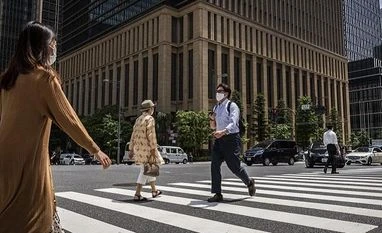
Photo: Bloomberg
Bloomberg
4 min read Last Updated : May 28 2021 | 4:00 PM IST
Japanese Prime Minister Yoshihide Suga extended a state of emergency that includes Tokyo and other major cities, in a last-ditch effort to rein in Covid infections ahead of the capital hosting the Olympics in less than two months.

Suga said Friday the emergency that was due to end on May 31 would be extended to June 20, a little more than a month before the Tokyo Olympics start. The extension would be for Tokyo, Osaka and seven other prefectures that comprise about half of the nation’s economy.

“The nationwide infection numbers have been falling since the middle of the month,” Suga told his coronavirus task force. “But the situation is still unpredictable,” he added, noting case numbers remained high in Tokyo and Osaka.

The prime minister faces enormous pressure to keep the virus under control, and the public is worried the global sports spectacle could turn into a superspreader event. Still, he has few tools left to slow the spread of the virus. His government is running one of the slowest vaccination programs in the developed world, so far administering just 11.8 million shots, compared to 291 million in the US.

“If the current situations continue, it will be very difficult to hold the Olympics,” Haruo Ozaki, chairman of Tokyo Medical Association, said at an online briefing Thursday. “In that sense, this is the last chance.”

Nearly 60% of respondents in a Yomiuri newspaper poll this month said the games should be called off, and the Asahi newspaper, a sponsor of the event, wrote in an editorial on Wednesday that Suga should make the decision to cancel.

A decision on whether to hold the Tokyo Olympics must be made by the end of June at the latest, International Olympic Committee member Dick Pound said in an interview with Jiji Press. The IOC has the final say, but in a statement this week it said all games-related decisions “have always been and will always be taken in full agreement of all parties.” The games are set to open July 23.

The extension comes after the US on Monday said Americans should avoid traveling to Japan because of the virus. The action -- which comes despite far lower infection rates in Japan than in the US -- was a fresh blow to a country struggling to convince the international community it is ready to host the Summer Olympics, following their delay in 2020.

The latest state of emergency, put in place in late April, helped reduce the daily number of recorded infections in the capital from 1,027 on April 29 to 614 on Friday. The restrictions have meant that bars and restaurants were made to close at 8 p.m. and banned from selling alcohol, while some large stores were closed.

Analysts factoring in a longer emergency now see a larger chance of Japan suffering a second straight quarterly contraction. “Japan’s imminent extension to its virus emergency probably spells another recession,” wrote Bloomberg Economics’ Yuki Masujima.

Scrapping the Tokyo Olympics could then inflict further economic damage. Cancellation would cause a direct economic loss of about 1.4 trillion yen ($12.7 billion), according to Toshihiro Nagahama, chief economist at Dai-Ichi Life Research Institute.

Takahide Kiuchi at Nomura Research Institute Ltd. estimated the figure at 1.8 trillion yen, based mainly on lost consumption.

Virus management is crucial for Suga, who faces a party leadership election in September and must hold a general election by the end of October. While none of the opposition parties has enough backing to topple his ruling Liberal Democratic Party, sliding support could prompt the LDP to replace Suga as premier.

One subscription. Two world-class reads.

Already subscribed? Log in

Subscribe to read the full story →
*Subscribe to Business Standard digital and get complimentary access to The New York Times

Smart Quarterly

₹900

3 Months

₹300/Month

SAVE 25%

Smart Essential

₹2,700

1 Year

₹225/Month

SAVE 46%
*Complimentary New York Times access for the 2nd year will be given after 12 months

Super Saver

₹3,900

2 Years

₹162/Month

Subscribe

Renews automatically, cancel anytime

Here’s what’s included in our digital subscription plans

Exclusive premium stories online

  • Over 30 premium stories daily, handpicked by our editors

Complimentary Access to The New York Times

  • News, Games, Cooking, Audio, Wirecutter & The Athletic

Business Standard Epaper

  • Digital replica of our daily newspaper — with options to read, save, and share

Curated Newsletters

  • Insights on markets, finance, politics, tech, and more delivered to your inbox

Market Analysis & Investment Insights

  • In-depth market analysis & insights with access to The Smart Investor

Archives

  • Repository of articles and publications dating back to 1997

Ad-free Reading

  • Uninterrupted reading experience with no advertisements

Seamless Access Across All Devices

  • Access Business Standard across devices — mobile, tablet, or PC, via web or app

Topics :CoronavirusCoronavirus TestsCoronavirus VaccineJapanOlympics

Next Story



