Judges appointment row: Govt firefights Subramaniam issue
Law minister says government has the 'highest regard' for the judiciary, CJI
BS Reporter New Delhi Cornered by the Chief Justice of India (CJI) on the controversy over senior advocate Gopal Subramaniam's appointment as a Supreme Court judge, the government now claims it could do little to reconsider the case as the collegium had withdrawn Subramaniam's candidature for the appointment at the behest of the lawyer (who had insisted on withdrawing his consent).
"I want to reiterate very firmly that the Narendra Modi government has the highest respect for the judiciary. The independence of the judiciary, including the Supreme Court, is an article of faith for the government. We have the highest respect for the Chief Justice of India," Law Minister Ravi Shankar Prasad stated categorically on Wednesday morning, while refusing to comment on the issue.
Later, in the evening after the Cabinet meeting, Prasad said, "The government has the right to be consulted. Whatever the government did, was based on solid and cogent grounds."
Prasad's comments came on the heels of CJI's statement on Tuesday evening that the government had acted "unilaterally" in segregating Subramaniam's file, "without his knowledge and consent."
Government sources told Business Standard that with both CJI and Subramaniam going public on the Supreme Court judge selection process, the government felt it was imperative to get its views across. "As a standard operating procedure, verification about all the four was conducted. Out of them, three cases were fine but that of Subramaniam was referred back to the collegium for reconsideration," they said.
"In the meantime, Subramaniam himself withdrew his candidature because of which his candidature lapsed and the issue was no longer valid. Hence, his case was not taken forward," the sources added.
The National Democratic Alliance government has come under attack from both within the bar and outside it for attempting to damage the autonomy of the judiciary. Since Tuesday night when CJI's statement caused a stir, the government has been going all out to assure that the new dispensation respected the judiciary and there was no confrontation between the executive and the judiciary.
According to the memorandum of procedure regarding the appointment of Supreme Court judges, the government can return the file to the collegium for reconsideration. However, if the collegium sticks to its decision, the government would have to abide by the latter's choice. Significantly, there is no time bar for the government to take a decision. In this case, according to the government; as the Collegium headed by CJI R M Lodha had recalled Subramaniam's name (since Subramaniam himself met the CJI and insisted on withdrawing his consent to be judge), the executive could do little to take forward his case.
The Congress, meanwhile, took this opportunity to hit out at the government for "attempting to undermine India's judiciary."
While the government had segregated Subramanium's file, it forwarded and cleared the names of the Chief Justices of Calcutta and Orissa High Courts, Arun Mishra and Adarsh Kumar Goyal, respectively and senior advocate Rohinton Nariman and appointed them apex court judges.

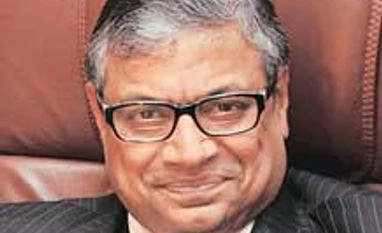 "Judges appointment row: Govt firefights Subramaniam issue")


 Connect with us on WhatsApp