“With unabated cold north-westerly winds reaching the plains, minimum temperatures will now drop and settle in single digits. With this, dispersing pollutants from the atmosphere would be very difficult. The more the minimum temperatures dip, thicker will the inversion layer be. And the thicker the inversion layer, the more difficult it would be for the sun;s rays or winds to penetrate through this layer and disperse the pollution,” said Mahesh Palawat, Vice President-Meteorology and Climate Change, Skymet Weather.
Since stubble burning has now reduced, the elevated levels of air pollution can be attributed to industrial activity, vehicular pollution and prevailing weather conditions.

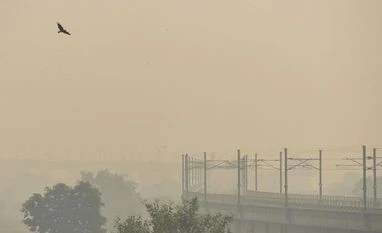 "Air in North India turns 'poor' again as rains play truant, winds go slow")










 Connect with us on WhatsApp