Modi's industry conference in US to attract pharma, IT players
Interaction is being orgainsed by the USIBC and participants from various industry segments are likely to join the video conferencing
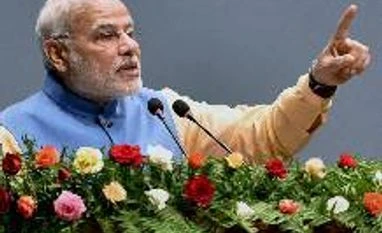
Sushmi Dey New Delhi Prime Minister Narendra Modi will address Indian and American industry through video conferencing during his visit to the US later this month. The interaction is being organised by the US- India Business Council (USIBC) and participants from various industry segments are likely to join the call, it is learnt.
While declining to disclose the programme’s details immediately, USIBC’s acting-president Diane Farrell said: “The USIBC is very pleased to be actively involved in planning for upcoming visits by India’s Prime Minister Narendra Modi, as well as Finance and Defence Minister Arun Jaitley.”
According to a source, the conference call will be attended by a large number of players from the pharmaceutical and information technology (IT) sectors.
“The two key issues which are expected to set the stage for discussion are supply and quality of drugs, and intellectual property. These are two key issues which will certainly be part of the dialogue,” the source said.
Farrell said: “These visits present a wonderful opportunity to honour Prime Minister Modi and his new government and to foster dialogue with American government and business leaders on a range of important subjects. We believe the US and India have the opportunity to set the course for a new relationship that will benefit both nations for decades to come.”
While arrangements between India and the US warmed up around 2000, of late trade relation between the two have gone slow over several issues.
Pharma and IT sectors have been largely impacted due to the ongoing tussle between the two countries on intellectual property rights and laws. In April, the US brought out the Special 301 report taking unilateral measure to pressurise countries to accept intellectual property rights protection beyond World Trade Organization obligations.
The report classified India as a ‘priority watch list country’.
The Special 301 report highlights concerns related to various provisions of Indian patent law, grant of compulsory licence (CL) and inclusion of a statement relating to CL for green technologies in India’s manufacturing policy. Indian industry and government are of the opinion that the US report is driven by inputs given by the American industry on their perception of the level of protection provided by India to intellectual property.
“Modi’s address to the Indian and American diaspora is crucial from the point of view of reassuring confidence and reaching an agreement with the business community,” said the source cited above.
Beside intellectual property-related issues, India’s $100-billion software services sector, which derives two-thirds of its revenues from the US, has been finding it difficult to send workers to client sites owing to higher visa rejections. India has been lobbying with the US government to ease immigration norms.
The Indian drug and food manufacturing industry is also faced with increasing number of enforcements and bans by the US drug regulator over quality concerns. India is the largest foreign supplier of generic medicines to the US. It is also the eighth-largest exporter of food products to the US.
Recently, on the sidelines of an event in New Delhi, Kathleen Stephens, US Charge d’Affaires to India, said: “I also hope the leaders at that level can send a strong message to their respective bureaucracies, to their respective businesses... that we are at a new page now... It is time for everyone to look afresh at what opportunities there are. So that is the message I hope that will come out.”

 "Modi's industry conference in US to attract pharma, IT players")


 Connect with us on WhatsApp