Money for the muses: Performing arts find new ways to keep the show going

Young India needs exposure to the arts to get in touch with their imagination, said Rama Bijapurkar Author and marketing consultant
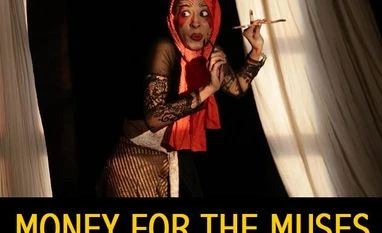
Director-actor Yuki Ellias in her play, Elephant in the Room. Photo: Junoon
Arundhuti Dasgupta
9 min read Last Updated : May 04 2019 | 11:42 AM IST
Inside a dilapidated mill compound in Mumbai’s now tony but once purely working class district, Parel, in an auditorium sealed with darkness, a motley group sits in silence. Homemakers, lawyers, entrepreneurs, venture capitalists, CEOs, a few artistes, musicians and actors — the room is a microcosm of the city that has patched them together as custodians of the mesmerising performance playing out before them.

On stage, actor Yuki Ellias has the room in thrall, essaying multiple roles in a play, Elephant in the Room, that she has also directed. Her performance, the venue (G5A, inside the Shakti Mills compound) and the eclectic crowd (75-100 people) were all put together by Junoon Salon, an arts initiative funded by a select group of donors assembled by its partner-founders, Sanjna Kapoor and Sameera Iyengar.  

The Salon, barely a couple of years old, is part of Junoon, which the duo floated seven years ago to promote local artistes, theatre and art. Junoon Salon is not a theatre group, nor does it possess an auditorium; its only assets are a team of curators and managers who work closely with artistes and venue owners to find the right space and audience for their work.


In management parlance, Salon’s is an “asset-light model”, although most people in the arts would baulk at artistes and auditoria being categorised thus. But, say donors and large grant-making organisations, this is a promising business model and one among many that are transforming the way the arts are run and managed in the country.

Arundhati Ghosh, executive director of the Bengaluru-headquartered not-for-profit India Foundation for the Arts (IFA), says that she sees an entrepreneurial spirit among artistes today as well as greater maturity among private donors. As a result, there are vibrant spaces and business models bubbling up within the domain that once ran on charity, love and a few scraps of benevolence.

Salon’s members pay Rs 1.25 lakh for single and Rs 2 lakh for couple memberships annually. They also have corporate memberships that allow eight people in for Salon events for Rs 10 lakh a year. 
Membership opens the door to a set of performances that are followed by an evening spent engaging with artistes and other patrons talking about theatre, life and the arts. Much like the Parisian salons of the 18th and 19th centuries, the artistes and their performances are the toast of the season; the only difference is in the nature of the patronage. “Salon was a leap into the unknown,” says Kapoor. Its role is to create platforms not theatre.

“Junoon Salon is a curated aggregator model that has emerged from within the arts, while Studio Tamashaa and Studio Safdar (run by theatre professionals) are artiste-led space models,” Ghosh points out. The focus is on democratising the funding process within the arts — while the Salon’s relatively high membership fees seem faintly tinged with elitism, it is those very fees that fund performances by even little-known folk artistes, bringing rural performers to urban audiences.

Artistes — actors, directors, musicians — are all experimenting with ways to make a business out of their craft. Some emerging business models are tied to a physical space, such as the Sudhanva Deshpande-run Studio Safdar in New Delhi and Studio Tamaasha co-founded by Sunil Shanbag and Sapan Saran in Mumbai. Some operate simply with a Facebook page, coming together for an event or a festival that is completely funded by a ticket-paying public and community donations, such as the Kabir Festival in Mumbai, the Bikaner Theatre Festival and others.

Everywhere the emphasis is on individual donors and community building, much like what the internet generation labels “subscription-based models” (where companies seek a commitment from loyal consumers for long-term associations). A group of interested patrons, everyone says, is better than wearing out shoe soles for government grants or getting tied up in knots over the various strings that come attached with corporate sponsorships.

Ghosh says that India has a long history of private donors. But what is new and interesting is the initiative being taken by the artistes themselves. Their efforts have helped rouse professionals to pitch in with their time, money and influence.

One of Salon Junoon’s early donors is Deepak Satwalekar, former managing director of HDFC and HDFC Life Insurance and now with several boards and an advisor to Nexus Ventures. Satwalekar invested in his personal capacity because he saw this as a way to keep the country’s arts traditions alive. “The performing arts needs support and that is what drove me to step in,” he says. Despite knowing that he could have paid a fraction of the amount for tickets to these performances. “It is different from buying a painting or writing a charity cheque,” he points out. It calls for a deeper engagement, supports artistes and creates a more open system of access to the arts. His father was a painter, Satwalekar says, and he knows just how important it is to support artistes.

Individuals are opening up their wallets, says Sapan Saran of Studio Tamaasha. Saran and Shanbag set up the studio in 2017 with an annual budget of Rs 20 lakh in Versova, a suburb along Mumbai’s western coastline that teems with theatre and television professionals. “We wanted to test out the potential of such a space and also see if we could do something entrepreneurial.” After two years of providing space for theatre artistes and even offering a theatre residency, the funds ran out. They were all ready to close shop. But a chance conversation with a Studio Tamaasha regular, Mumbai-based businesswoman Deepa Tracy, led to a fresh lease of life as she offered them a new space in neighbouring Lokhandwala. “Well, come and look at some space I have, and make it buzz!” she told them and they did.

In Bikaner, Rajasthan, Sudesh Vyas runs the five-year-old Bikaner Theatre Festival, which was a five-day, 26-play affair this year. “Our festival costs Rs 4-6 lakh and we work entirely with local funds.” Hotels, theatre owners and transporters offer their services free and the public and the local bureaucracy lend their support. Vyas, who curates the entire festival and is careful about the quality of the theatre groups and the performances being staged, says, “I told the people of the city that we are doing this for ourselves and to showcase our city to the country.” Money is not a problem, according to him, as he works on a shoestring budget and the citizens of Bikaner step in with more than their share. Finding quality plays, however, is a different story, he says.  

Community-funded art leads to greater participation and a sense of ownership, says Falguni Desai, who along with a six-member team co-ordinates the annual Kabir Festival in Mumbai. Through the year the team members work at their respective day jobs, coming together along with an army of volunteers every year during the months of January-February. The festival started in 2011 with corporate sponsors, but within a year the biggest funder walked out and they contemplated shutting it down. However, with a web of associations that the team had built and a dedicated set of volunteers and artistes, the festival kept its date and has only grown every year. It currently costs Rs 10-12 lakh to put the four- to five-day event together and it runs on public funds.

The Bikaner Theatre Festival is completely funded by a ticket-paying public and community donations. Photo: Bikaner Theatre Group
The IFA also encourages individual donors, who contribute between Rs 5,000 and Rs 10 lakh a year. Vivien Masot, a French economist living in India since 2006, gives Rs 20,000 annually to the IFA. “I decided to raise my annual contributions (from Rs 5,000) because of the strong confidence that I built in IFA,” he says. Masot believes that traditional crowd-funding platforms don’t work in the arts, and that one needs “trust built on human interactions”.

Sudhanva Deshpande says that for an overtly political organisation like Jana Natya Manch and its associated space, Studio Safdar (which was named after slain left-wing activist, Safdar Hashmi), funds are more difficult to come by. Government funding has dried up and the large corporates aren’t interested. Direct audience contributions and funding from like-minded institutions and organisations are the only recourse. Renting out Studio Safdar, which Deshpande set up in 2012 in Delhi’s Shadi Khampur village, for classes and other events helps bring in some funds too. 

Money is still a struggle, but for Deshpande, the big shift has been the way present-day artistes conduct their lives. “The field has opened up, performers are able to live off their acts in the larger cities,” he says. Theatre groups are paying their actors and the gig economy has opened up opportunities for them as voice-over artistes, corporate trainers, actors in web series and so on. YouTube has also emerged as a highly popular auditioning platform for a host of performers.

A changing ecosystem is driving a more entrepreneurial sensibility, says Ghosh. At the same time there is greater involvement from citizens to drive a better understanding of the value that the arts hold out for society at large. Rama Bijapurkar, author and marketing consultant, says, “A predominantly engineering and science-oriented young India needs exposure to the arts to get in touch with their imagination and creative faculties and also be rooted in an authentic sense of who they are and where they belong.” The arts programme that she helped Junoon set up to be disseminated in schools and management institutes is also beginning to sustain itself.

Vivien Masot, French economist
However, the industry still lacks people who can offer strategic and managerial expertise to lead the fledgling businesses into a more stable existence. There are some efforts to remedy this. One of Mumbai’s most venerable performance centres, for instance, has been contemplating a programme for arts administrators for a few years. And another group of professionals from the India Theatre Forum (ITF), IFA and Junoon has launched a programme called SMART (Strategic Management in the Art of Theatre) to address theatre practitioners’ need for strategic thinking and management in their work. The Muses may finally share the stage with Mammon.


One subscription. Two world-class reads.

Already subscribed? Log in

Subscribe to read the full story →
*Subscribe to Business Standard digital and get complimentary access to The New York Times

Smart Quarterly

₹900

3 Months

₹300/Month

SAVE 25%

Smart Essential

₹2,700

1 Year

₹225/Month

SAVE 46%
*Complimentary New York Times access for the 2nd year will be given after 12 months

Super Saver

₹3,900

2 Years

₹162/Month

Subscribe

Renews automatically, cancel anytime

Here’s what’s included in our digital subscription plans

Exclusive premium stories online

  • Over 30 premium stories daily, handpicked by our editors

Complimentary Access to The New York Times

  • News, Games, Cooking, Audio, Wirecutter & The Athletic

Business Standard Epaper

  • Digital replica of our daily newspaper — with options to read, save, and share

Curated Newsletters

  • Insights on markets, finance, politics, tech, and more delivered to your inbox

Market Analysis & Investment Insights

  • In-depth market analysis & insights with access to The Smart Investor

Archives

  • Repository of articles and publications dating back to 1997

Ad-free Reading

  • Uninterrupted reading experience with no advertisements

Seamless Access Across All Devices

  • Access Business Standard across devices — mobile, tablet, or PC, via web or app

Next Story



