
MT-1 satellite brought down successfully, disintegrates over Pacific
The Indian and French space agencies on Tuesday successfully brought down the decommissioned climate satellite Megha-Tropiques-1 (MT-1) in a controlled manner.
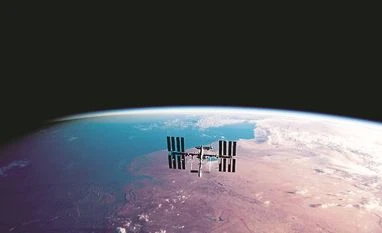 "MT-1 satellite brought down successfully, disintegrates over Pacific")
WebinarsNew
Deep DiveNew
Explore Business Standard
The Indian and French space agencies on Tuesday successfully brought down the decommissioned climate satellite Megha-Tropiques-1 (MT-1) in a controlled manner.
The Indian and French space agencies on Tuesday successfully brought down the decommissioned climate satellite Megha-Tropiques-1 (MT-1) in a controlled manner.
The Indian Space Research Organisation (ISRO) said as per the latest telemetry, the climate satellite has re-entered the Earth's atmosphere and would have disintegrated over the Pacific Ocean.
The Indian space agency added that the final impact region estimated is in the deep Pacific Ocean within the expected latitude and longitude boundaries.
"The entire sequence of events was carried out from the Mission Operations Complex in ISTRAC," it said.
The satellite was launched on October 12, 2011, as a collaborative effort between the ISRO and French space agency CNES for carrying out tropical weather and climate studies.
Since August 2022, the satellite's perigee was progressively lowered through a series of 20 manoeuvres spending about 120 kg of fuel, ISRO said.
According to the ISRO, multiple manoeuvres including the final de-boost strategy were designed after taking into consideration several constraints, including visibility of the re-entry trace over ground stations, ground impact within the targeted zone, and allowable operating conditions of subsystems, especially the maximum deliverable thrust and the maximum firing duration constraint on thrusters.
"All manoeuvre plans were screened to ensure that there would be no post manoeuvre close approaches with other space objects, especially with the crewed space stations like International Space Stations and the Chinese Space Station," it added.
The final two de-boost burns were executed on Tuesday by firing four 11 Newton thrusters on-board the satellite for about 20 minutes each.
The final perigee (the point closet to the Earth for the orbiting satellite) was estimated to be less than 80 km, indicating that the satellite would enter the denser layers of the Earth's atmosphere and subsequently undergo structural disintegration.
"The re-entry aero-thermal flux analysis confirmed that there would be no surviving large debris fragments," ISRO said.
--IANS
vj/vd
(Only the headline and picture of this report may have been reworked by the Business Standard staff; the rest of the content is auto-generated from a syndicated feed.)
First Published: Mar 07 2023 | 11:22 PM IST


 Connect with us on WhatsApp