The Delhi government on Monday gave a slew of suggestions for the draft Master Plan of Delhi 2041, including having a provision of multi-level car parking under parks and a floor area ratio (FAR) regeneration policy to create maximum public green space, officials said.
Suggestions were also made that all utilities land of the Delhi Jal Board like WTP, STP, SPS, etc. should be allowed to be monetised as it is allowed in case of the Delhi Metro Rail Corporation.
The suggestions were given during a meeting chaired by Chief Minister Arvind Kejriwal with officials of various departments on the vision document which lays a roadmap for the long-term development of the national capital.
PWD Minister Satyendar Jain, Chief Secretary Vijay Dev and senior officers of the Public Works Department, Delhi Jal Board, Delhi Transport Corporation, as well the power, industries and transport departments, were present in the meeting.
"A common problem often noticed in Delhi is that of parking. To deal with the issue, the government proposed that parking solutions be provided by allowing multi-level car parking under existing parks within the colony or adjoining areas," the Delhi government said in a statement.
"At such sites, public parks can be reconstructed at top of such structures and the cost of such structures can be subsidised by allowing the construction of indoor sports clubs, community, multipurpose halls for public use at the upper basement or stilt level of such structures," it added.
It will help in removing cars and two-wheelers from roads and provide parking within 300 m from the individual's residence, Jain was quoted as saying in the statement.
To avoid any unnecessary burden of creating undue parking spaces on the developer government entity, in the meeting it was also suggested that parking requirements may be revised from "1 ECS to 2 ECS" per 100 sqm to 0.5 ECS per 100 sqm for all category government schools; and old age homes, orphanage parking requirements may be reduced from 1.8 ECS to 0.5 ECS (equivalent car space), the officials said.
The government also suggested measures to improve the environment of the city.
"To create maximum public green space, the government proposes an FAR regeneration policy where developers who surrender land for public use, are incentivised by offering proportionate extra FAR, the PWD minister said. FAR is the ratio of a building's total floor area (gross floor area) to the size of the piece of land, upon which it is built.
The incentive regeneration FAR (the extra FAR against surrendering land) allowed to developer entities for surrendering land towards public open green space should be in proportion to 2:1(land surrendered in percentage: incentive regeneration FAR in percentage allowed) subject to certain conditions, the officials said.
Also, to promote sustainable architecture, under the regeneration scheme in planned layouts, extra green FAR, which is proposed at 15 per cent for platinum or five-star green rated buildings, may also be made available for gold or three-star or four-star green rated buildings at 12 per cent, the statement said.
The draft MPD 2041 prepared by the Delhi Development Authority was made available early June on the website of the DDA and public suggestions and objections have been invited till July 23.
Creating a "24-hour city" with night-time economy, extensive transport infrastructure, affordable housing for all, healthy environment and checking unauthorised colonies and pollution are part of the guiding principles the DDA has laid out for the Master Plan of Delhi 2041.
The vision document largely covers the policies of environment, economy, mobility, heritage, culture and public spaces, among others.
The city government has also suggested that activities like badminton, table tennis, lawn tennis, swimming, etc should be permitted for all kinds of land use categories, to improve public health at large, the officials said.
Other suggestions for the draft master plan were on housing, slum rehabilitation and water management.
"EWS or affordable housing up to a carpet area of 50 sqm may be allowed in all land use categories subject to a minimum plot area of 2000 sqm to increase EWS housing, the PWD minister said.
For affordable rental housing - maximum ground coverage for affordable public rental housing should be increased from 33.33 per cent to 40 per cent. FAR should be increased from 200 to 400, the government has suggested.
To ensure more affordable housing, the Delhi government has proposed not charging conversion charges in cases of EWS/affordable group housing projects, and increasing the FAR of group housing projects from 200 to 300.
Additionally, we propose that dwelling units be increased from 200 to 500, Jain said.
Educational, Sports and Cultural Coaching centres to be allowed in all types of commercial buildings.
For enhancing the economy, suggestions were also made to increase FAR for properties of various categories, like budget hotels, guest houses and local shopping centres.

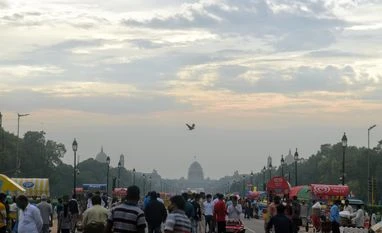 "Multi-level car parking under parks in draft MPD 2041, suggests Delhi govt")


 Connect with us on WhatsApp