National programme for injury control soon: J P Nadda
Union minister said that generally the younger generation get involved in accidents because of which 3 per cent of GDP gets affected in India
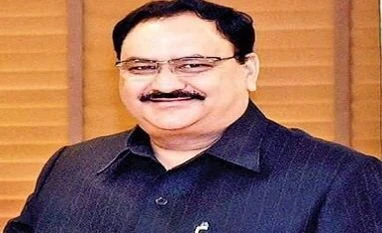
Press Trust of India New Delhi The Centre will soon come out with a national programme for injury control to provide emergency care to trauma victims, Union Health Minister J P Nadda on Thuesday said.
Every year nearly 16 lakh people die in road mishaps with more than 3,000 such deaths daily worldwide, he said.
"The government is ready and intends to go forward for a national injury control programme. We need the inputs of experts on this," Nadda told the third World Trauma Congress, 2016 here.
He said it is generally the "productive age or the younger generation" which is involved in accidents because of which there is a economic burden attached to it. As much as 1.5 per cent of the GDP worldwide gets affected because of this trauma. In India it is three per cent of the GDP.
This is because we are not able to give solutions at the level in which trauma is taking place and there is huge gap, the Union minister said.
"We want to initiate national injury control programme. It will be a holistic view and this programme will focus on how all types of trauma can be addressed. How to develop human resource, fulfilling of gaps, providing financial help to address trauma, all these issues will be worked out through a multi-dimensional approach," Nadda said.
Ruing non-availability of trauma systems and absence of pre-hospital care, he said the present in-hospital trauma care infrastructure cannot cater to the needs of 'multiply injured patients' while Emergency Medical Services Legislation also needs to be addressed and adapted uniformly.
Referring to a recent accident in which a man died after being hit by a vehicle in Delhi as none of the passersby came to his rescue, Nadda said that there is a need to develop the culture of being a good samaritan.
Noting that finance is not a problem and the government is ready to spend on healthcare, he said 11 new AIIMS are being set up with a cost of more than Rs 1,000 crore right input should be given at the right time.
Asserting that working in silos has become a habit, the Nadda said there is a need for inter-departmental cooperation and understanding as far as policy on trauma care is concerned.

 "National programme for injury control soon: J P Nadda")


 Connect with us on WhatsApp